What Is The Most Scenic Part Of The Icefields Parkway?
The Icefields Parkway packs 232 km of peaks, glaciers and waterfalls between Lake Louise and Jasper. Here is which stretch delivers the most, and how to pick a tour that covers it.
What Is The Most Scenic Part Of The Icefields Parkway?
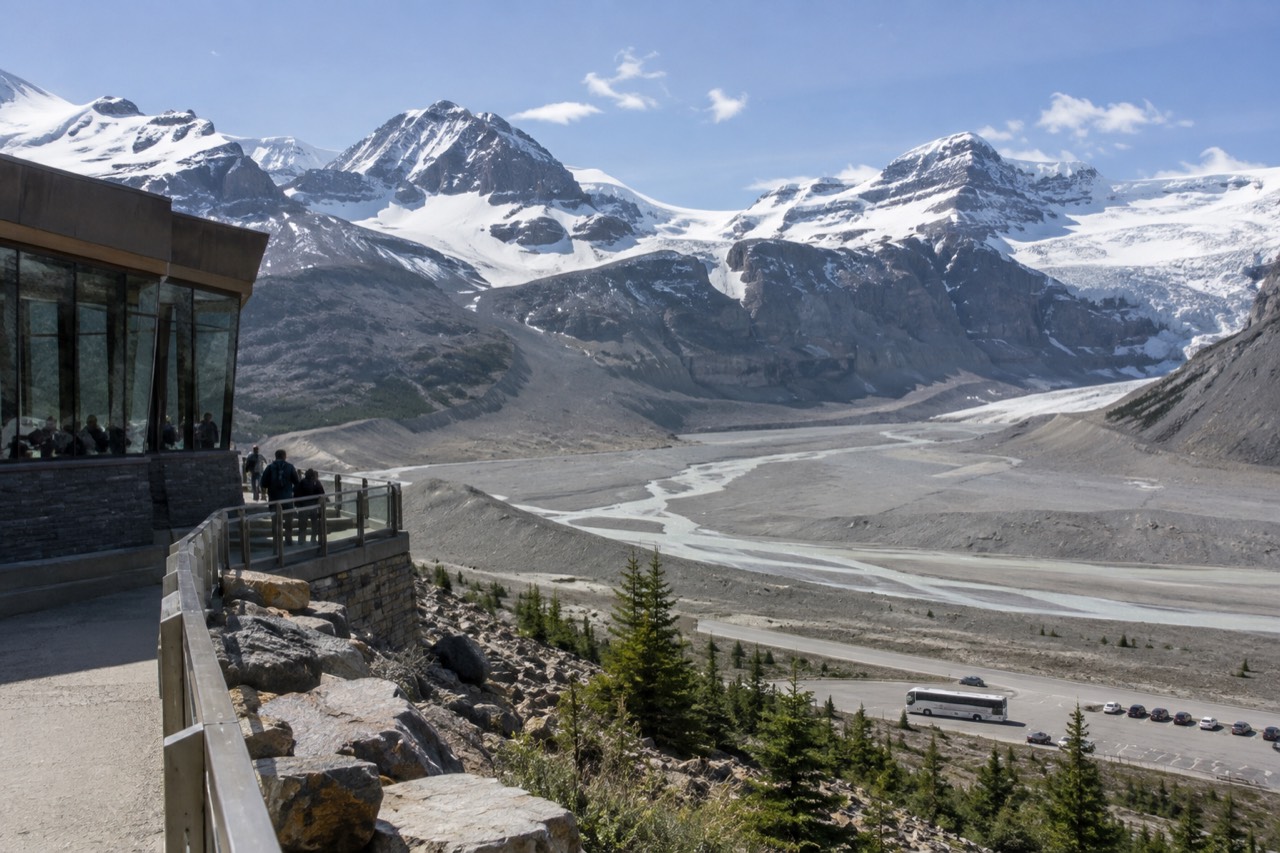
The most scenic part of the Icefields Parkway is the middle third around Sunwapta Pass and the Columbia Icefield. There the road climbs past 8 to 11 percent grades, Sunwapta Falls and the Athabasca Glacier sit within a short drive of each other, and the Icefield Centre marks the 103 km point south of Jasper. The northern half, from Athabasca Falls to Jasper, is the strongest runner-up.
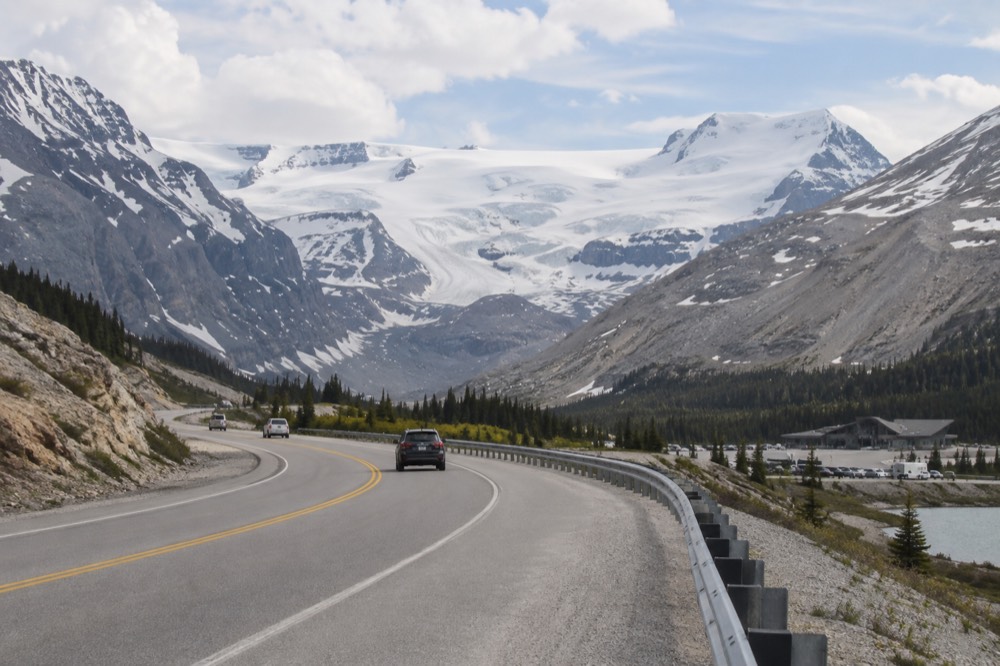
The Icefields Parkway, Highway 93 North, runs 232 km between Lake Louise in Banff National Park and the Jasper townsite. Parks Canada markets it as one of the world's great drives, and the claim holds up: the road threads between glacier-carved valleys, crosses a pass flanked by ice, and passes two of the most powerful waterfalls in the mountain national parks. But scenery is not spread evenly. Some stretches are forested valley driving with occasional window views, and others deliver a new headline sight every few minutes.
The middle third earns the crown for density. Between Sunwapta Falls, 54 km from Jasper, and the Bow Lake area further south, the road passes the toe of the Athabasca Glacier, climbs Sunwapta Pass on grades of 8 to 11 percent, and travels through the winter habitat of the Jasper herd of woodland caribou, a species at risk. The Athabasca Glacier itself is what Parks Canada calls Canada's most accessible glacier, sitting across the road from the Icefield Centre. On a clear day this is the stretch where you drive beside ice that is thousands of years old.
That density is also why the middle third is where the commercial infrastructure sits. The Columbia Icefield Adventure, the Ice Explorer vehicles that drive onto the glacier, and the glass-floored Columbia Icefield Skywalk over the Sunwapta Valley are all based here, running 1 May to 12 October in 2026, weather dependent. If your definition of scenic includes stepping onto the ice rather than looking at it, this is the stretch that lets you do it. Our Icefields Parkway tours guide breaks down the full menu of ways to travel the road with an operator.
One honest caveat belongs here. The 2024 Jasper Wildfire burned along the Athabasca valley south of town, at the townsite's southwest edge and in the Maligne Valley, and the burn is visible from the northern end of the parkway. Regrowth is under way, and Parks Canada's own summary is that the majority of Jasper National Park is now open and ready to explore. The fire does not erase the scenery, but a first-time visitor should expect to see a regenerating landscape on part of the drive, not untouched forest all the way.
If you are weighing a full-day tour against exploring on your own, the question of which stretch you most want usually decides the itinerary, because operators cover different halves of the road. These three options span the range:
Why the Sunwapta Pass and Columbia Icefield stretch stands out
The stretch from Sunwapta Falls to the Columbia Icefield packs the parkway's tallest ice, its steepest driving grades and its two flagship paid attractions into roughly 50 km, which is why almost every glacier tour on this road concentrates here. Sunwapta Falls sits 54 km from Jasper, the Icefield Centre 103 km, and between them the road climbs through caribou winter habitat to a pass flanked by the largest icefield in the Canadian Rockies.
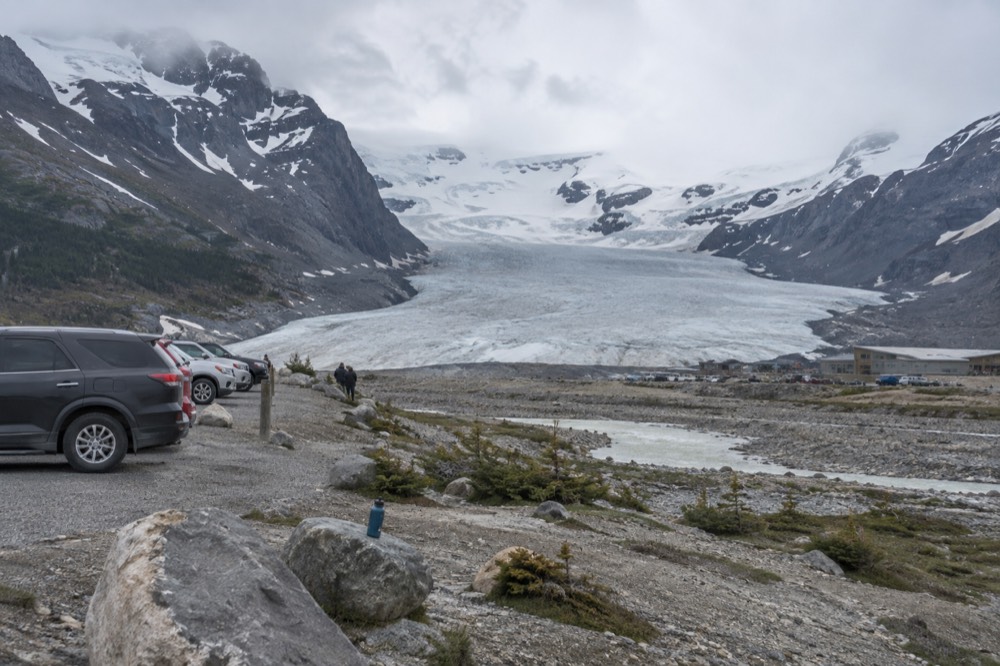
Start with the ice itself. The Columbia Icefield is the largest icefield in the Canadian Rockies, a surviving remnant of the ice mass that once mantled most of Western Canada's mountains, covering more than 300 square kilometres. The Athabasca Glacier spills from it over three giant bedrock steps and ends within sight of the road. Mount Snowdome, on the icefield, is one of only two hydrological apexes in North America: water from its ice flows to the Pacific, the Arctic and the Atlantic. Very few roads on the continent put you within walking distance of a triple continental divide.
Then there is the drama of the drive. The ascent and descent of Sunwapta Pass, in the Columbia Icefield area, is where the parkway's 8 to 11 percent grades concentrate. The road is not salted in winter and maintenance runs 7 am to 3:30 pm, which tells you something about how seriously Parks Canada treats this section even in the operating season. There are no services along the parkway in winter and no cell coverage en route, so the stretch feels genuinely remote in a way the forested ends of the road do not.
The glacier is also a changing sight, and Parks Canada documents the change carefully. Jasper lost 21.8 percent of its total glacier mass between 1985 and 2024, and the Columbia Icefield lost nearly 13.3 percent over the same period. Between 2017 and 2024 alone the icefield lost about 1.5 cubic kilometres of ice, a volume Parks Canada compares to nearly 590,000 Olympic swimming pools. The glacier has been receding for the last 125 years. Seeing it now is not a marketing line; the ice you look at is measurably smaller than the ice a visitor looked at a decade ago.
Two waterfalls anchor the northern gate of this stretch. Sunwapta Falls is a stepping waterfall formed where the smaller hanging Chaba Valley meets the larger Athabasca Valley, and it has carved a deep limestone gorge below its footbridge. The trail beyond passes through the Chaba River burn area, the legacy of a 1967 wildfire, which is now one of the best bear and moose habitats in the park. Athabasca Falls, 23 metres high and 30 km from Jasper, is not tall by Rockies standards, but the size of the river makes it, in Parks Canada's words, one of the most powerful falls in the mountain national parks.
Should you want to experience this stretch with a guide rather than drive it yourself, a full-day tour from Jasper is the most common choice, since the Icefield Centre sits 103 km south of town, a serious round trip to self-drive with stops.
What the northern half, from Athabasca Falls to Jasper, does best
The northern half of the parkway, from the Jasper townsite down to Athabasca Falls and back, is the best stretch for waterfalls, river scenery and wildlife viewing in a single morning, and it is the half you can cover comfortably on a half-day trip. Athabasca Falls sits 30 km from Jasper, Sunwapta Falls 54 km, and both day-use areas and trails are open.
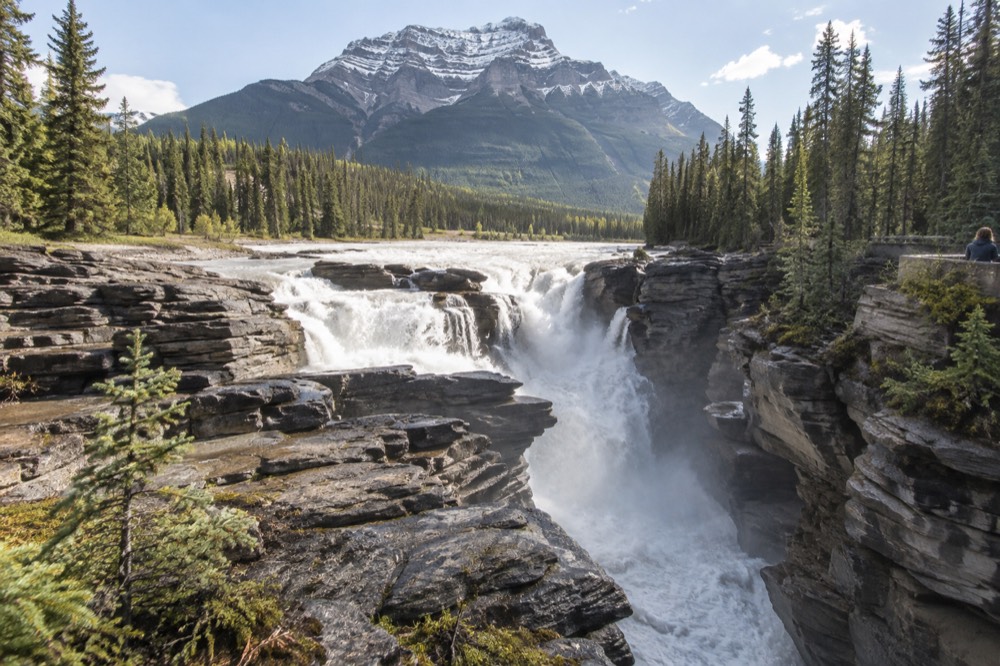
The northern half is the accessible half. From Jasper, you reach Athabasca Falls after a short drive, and the falls reward the trip more than their height suggests. The water pours over hard quartzite and has cut into the softer limestone beneath, carving potholes and a short canyon you can walk beside. The Athabasca River itself is the largest river system in Jasper and was designated a Canadian Heritage River in 1989, so the scenery here is wide river valley rather than ice.
Wildlife is the northern half's quiet advantage. Bighorn sheep, mountain goats, coyotes and deer are named by Parks Canada as commonly sighted along the Icefields Parkway in winter, and they are present year round. The rules matter as much as the sightings: stay 30 m away from elk, deer and moose, and 100 m away from bears and other carnivores. Roadside wildlife viewing is a restricted activity in the park, meaning you stay in your vehicle, pull over only where it is safe, and move on rather than linger. No tour can promise you an animal, but this corridor is where the odds concentrate.
The northern half is also the half affected by the 2024 wildfire's visible edge. The burn is visible along the Athabasca valley south of town. If your mental image of the parkway is wall-to-wall old-growth forest, adjust it: parts of this drive show a regenerating landscape, and Parks Canada notes whitebark pine restoration planting is under way. Plenty of the corridor is untouched, and the valley views are as wide as ever.
For visitors who want the northern half plus a guide's eyes on the wildlife, a sightseeing tour that covers the valley roads is a strong fit. The Wildlife and Sightseeing Tour with Maligne Cruise is built exactly for this: a guided drive with hotel pickup, paired with the boat cruise to Spirit Island on Maligne Lake, the largest natural lake in the Canadian Rockies. It runs about 6 hours from $169.04, rated 4.8 across 665 reviews, with free cancellation.
That combination, valley drive plus lake cruise, is also the most weather-proof way to spend a day if the parkway is socked in cloud. The Maligne Valley sits at a lower elevation than Sunwapta Pass, the Maligne Lake Road is open year round, and the cruise runs 27 May to 11 October in 2026, weather dependent. If your parkway day collapses, this is the itinerary most likely to survive it.
Can you see the best of the parkway in one day?
Yes, one day is enough to drive the full 232 km parkway with stops at Sunwapta Falls, the Columbia Icefield and Athabasca Falls, but it is a long day and it forces you to choose between depth and coverage. A one-day trip works best from Jasper to Banff as a one-way journey, or as a Jasper round trip to the Icefield Centre and back with two or three stops.
The honest arithmetic is simple. The road is 232 km end to end, with no services in winter and limited services in summer, no cell coverage en route, and a maximum speed limit of 90 km/h inside the national parks, lower in places for wildlife. A one-way journey with stops at the headline sights is a full but manageable day. A round trip from Jasper to the Columbia Icefield is also a full day, since the Icefield Centre is 103 km south of town. What one day does not allow is lingering: a glacier hike, a long lunch at the Icefield Centre and a leisurely pace at three waterfalls do not fit together with covering the whole road.
Depth versus coverage is the real decision. If stepping onto the Athabasca Glacier matters more than seeing every kilometre, spend the day at the middle third: the Ice Explorer and Skywalk combo, the guided glacier hikes, or the small-group Ice Odyssey experience all operate from the same Discovery Centre base. If the drive itself is the attraction, book a one-way Jasper to Banff tour and let someone else handle the wheel while you watch the valleys go by. Our Banff to Jasper drive guide covers the full-corridor itinerary in detail, and the question of whether you can do the parkway in one day gets its own longer answer.
One planning fact that surprises visitors used to Banff: Jasper has no timed entry system, no reserved-access corridor and no mandatory shuttle for any attraction. The only authorization required to travel anywhere in the park is a Park Pass. Banff has the shuttle system for Lake Louise and Moraine Lake; Jasper does not. That difference is why a Jasper-based parkway day is logistically simpler than the equivalent day out of Banff, though a pass is still legally required, and Parks Canada charges daily admission per person, $12.25 CAD for an adult, with a Family/Group rate of $24.50 CAD covering up to seven people in one vehicle. Check the Parks Canada fee page at Jasper's fee schedule before you go, because fees are reviewed annually.
Here is how the headline stretches compare for a visitor deciding where to spend a single day:
| Stretch | Distance from Jasper | What it delivers | Best for |
|---|---|---|---|
| Athabasca Falls area | 30 km | Powerful falls, quartzite gorge, river valley | Short half-day, families |
| Sunwapta Falls | 54 km | Stepping waterfall, limestone gorge, 1967 burn regrowth | Photography, wildlife habitat |
| Columbia Icefield and Athabasca Glacier | 103 km | Largest icefield in the Canadian Rockies, glacier access, Skywalk | The headline scenery, glacier tours |
| Bow Lake and the southern half | 179 km to Sunwapta, 232 km to Lake Louise | Glacial lakes, Saskatchewan River crossings, quieter road | One-way Jasper to Banff journeys |
Which tour should you book for the stretch you want?
Match the tour to the half of the road you care about: glacier and icefield tours run from Jasper to the Columbia Icefield and back in the middle third, one-way Jasper to Banff tours cover the full corridor including the southern lakes, and valley sightseeing tours cover the northern half plus the Maligne Valley. The tour's confirmed stops list, not its title, tells you which stretch you are actually buying.
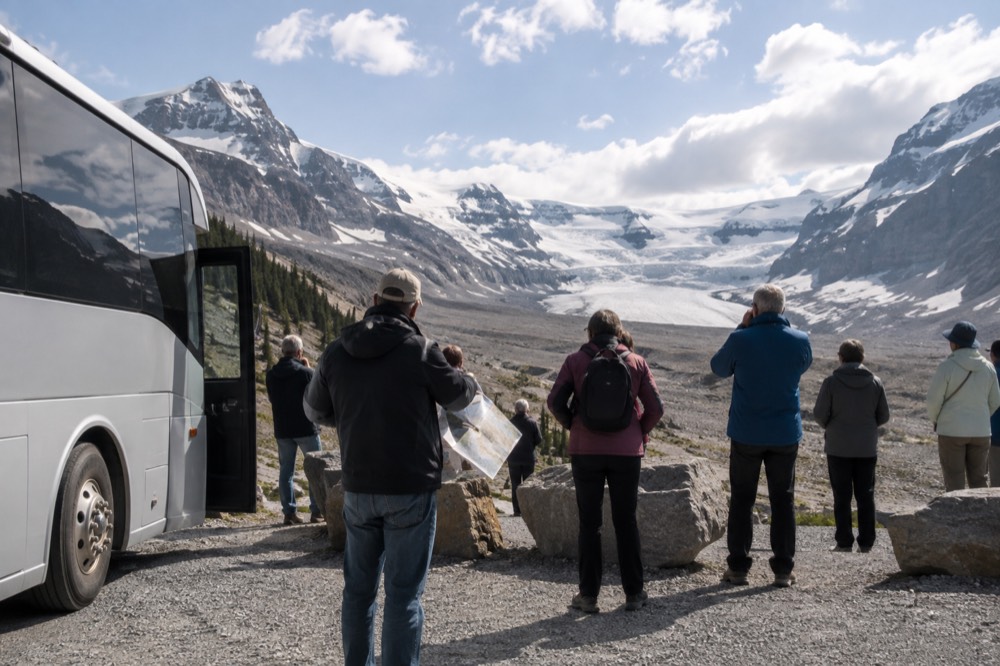
Read the stops before you read the price. A tour described as an Icefields tour may go no further than the Athabasca Glacier, while a Jasper to Banff day tour covers the entire road but spends less time at each stop. The seven-hour guided Icefield tour from Jasper, for instance, confirms stops at Athabasca Glacier, the Skywalk, Athabasca Falls and the Discovery Centre, from $248.08. The ten-hour Jasper to Banff tour covers the corridor end to end, from $212.2, and ends in a different town, which only works if your itinerary allows it. Neither is better; they answer different versions of this question.
For the glacier experience specifically, the choice is between riding and walking. The Ice Explorer combo from $95.17 drives onto the ice in a purpose-built vehicle and pairs it with the Skywalk, and it carries a 4.5 rating across 3,187 reviews, the most-reviewed glacier product on the road. The guided glacier hikes, from $101.57 for the three-hour IceWalks option rated 4.9 across 422 reviews, put you on foot on the Athabasca with a guide, which is a slower, closer look at the same ice. Parks Canada's own safety warning applies either way: do not cross the barriers on your own, because people have been killed falling into hidden crevasses.
Winter changes the calculus entirely. The parkway does not close for the winter, contrary to a persistent myth, but from 1 November to 31 March a vehicle on it must have snow tires or chains, there are no services along it, and it is often compact snow because it is not salted. Winter visitors based in Jasper usually swap the parkway for the Maligne Valley, where the road is open year round and the wildlife tours run daily. Check road conditions at 511 Alberta before you drive, and Parks Canada's road page for seasonal closures, because Parks Canada warns that navigation apps are not always accurate for Jasper National Park.
Whatever you book, remember that a park pass is legally required and is separate from your tour ticket unless the tour's own listing says otherwise. Whether an operator absorbs the commercial group rate Parks Canada charges is an operator-by-operator decision, and the tour's inclusions list is the only authority. Our coverage at Jasper National Park Tours keeps the confirmed stops and inclusions for every product on this road in one place, so you can compare what each itinerary actually covers before you commit.
Common questions about the most scenic part of the Icefields Parkway
What Is The Most Scenic Part Of The Icefields Parkway?
The middle third, around Sunwapta Pass and the Columbia Icefield, is the most scenic stretch. It concentrates the Athabasca Glacier, the largest icefield in the Canadian Rockies, the steepest driving grades on the road and the Skywalk, all within about 50 km. The northern half from Athabasca Falls to Jasper is the strongest alternative for waterfalls and wildlife.
How long does it take to drive the Icefields Parkway?
The road is 232 km end to end between Lake Louise and Jasper. No official source publishes a driving time, and this site does not estimate one. Plan on a full day with stops, note that there is no cell coverage en route, and check 511 Alberta for conditions before you set out.
Does the Icefields Parkway close in winter?
No. The parkway has no seasonal closure. From 1 November to 31 March, or any period when the road is covered in snow and ice, your vehicle must have snow tires or chains. There are no services along the road in winter, it is not salted, and snow clearing runs 7 am to 3:30 pm.
Is the Athabasca Glacier worth stopping at?
It is the most accessible glacier in Canada, sitting across the road from the Icefield Centre 103 km south of Jasper, and it is the anchor of the most scenic stretch. You can view it from the Toe of the Glacier trail, ride onto it with the Ice Explorer, or walk it with a guided glacier hike. Do not cross the barriers on your own; Parks Canada warns that people have been killed falling into hidden crevasses.
Can you see the whole parkway on a day tour?
Yes, on a one-way Jasper to Banff tour, which covers the full 232 km corridor and ends in Banff. Tours that return to Jasper reach the Columbia Icefield and back in a day but do not cover the southern half. Check the confirmed stops on the listing to see which half of the road a tour actually includes.