Banff to Jasper Drive: Distances, Stops and Whether to Tour It Instead
The Icefields Parkway between Lake Louise and Jasper is 232 km of road through the highest mountains in the Canadian Rockies, and the decision in front of you is simple: drive it yourself or let someone else take the wheel. Here is what the drive actually involves, with the numbers that matter.
Short answer
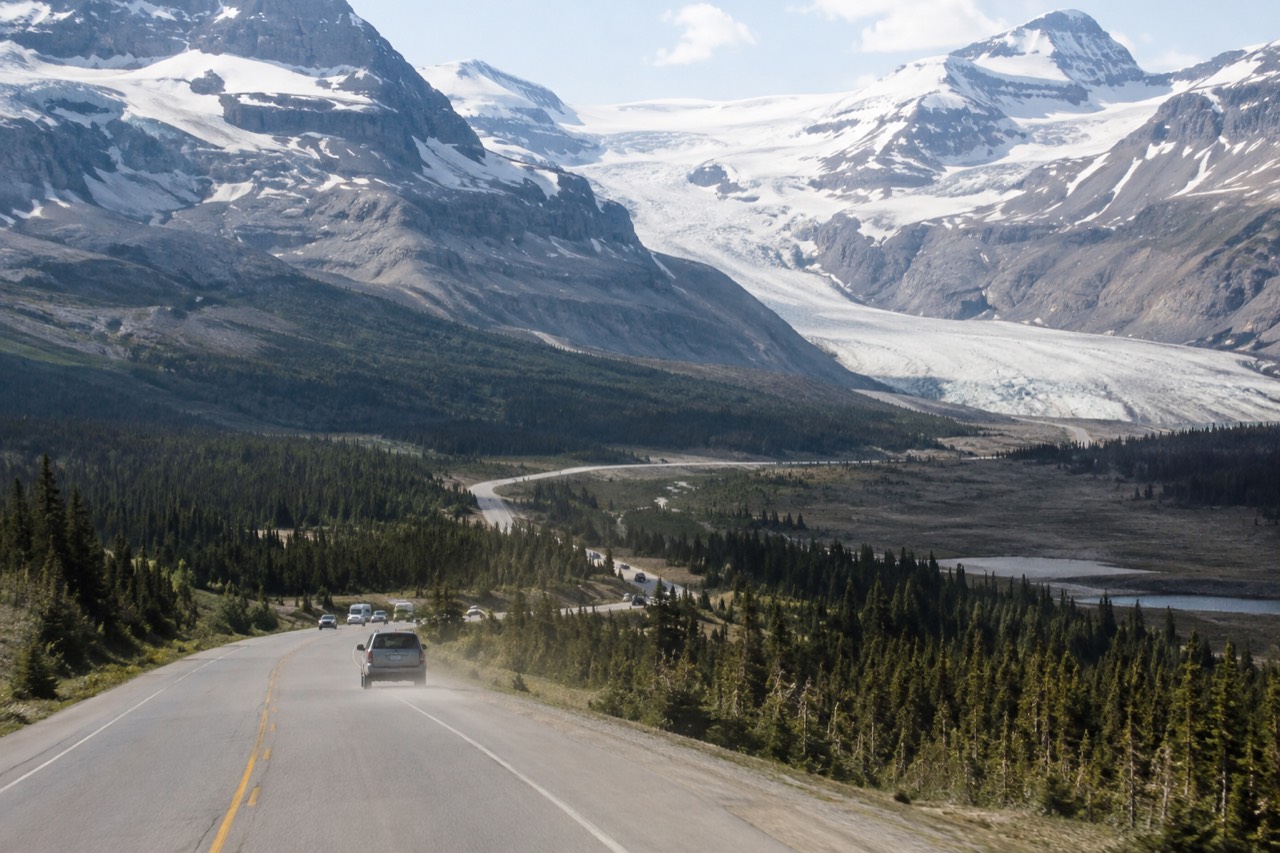
The Icefields Parkway runs 232 km between Lake Louise and the Jasper townsite, and a park pass is legally required to drive it, charged per person with a Family/Group cap of $24.50 CAD for up to seven in one vehicle. There are no services in winter and no cell coverage en route. A guided day tour from Jasper covers the glacier stops for from $248.08.
The Icefields Parkway is the 232 km ribbon of Highway 93 North that ties Lake Louise, in Banff National Park, to the Jasper townsite. Parks Canada publishes a dedicated page just for driving it in winter, which tells you something about the road's reputation. What it does not tell you, and what most first-time visitors underestimate, is that the drive is not a transfer between two towns: it is the single most concentrated stretch of alpine scenery in the country, and it deserves a real decision about how you experience it.
This guide lays out the verified distances, the stops in order, the paperwork the law requires, and the honest arithmetic between driving yourself and taking a guided day. Every figure here comes from Parks Canada or from the tour listings themselves, and where something changes season to season, you get the official page to check instead of a promise.
How far is the drive from Banff to Jasper?
The Icefields Parkway itself is 232 km between Lake Louise and the Jasper townsite, and that is the only distance any primary source publishes for the route. Banff sits south of Lake Louise on the Trans-Canada corridor, and Jasper is 404 km northwest of Calgary and 370 km west of Edmonton. No official source publishes a driving time, so plan by distance and by how many stops you want, not by a clock.
The parkway is not a highway in the divided, lit, serviced sense. It is a two-lane mountain road that crosses Sunwapta Pass, threads the Columbia Icefield area, and runs along the Athabasca River valley into Jasper. Long steep grades of 8 to 11 percent occur on it, especially near Bow Lake and on the ascent and descent of Sunwapta Pass, and the speed limit inside the national parks is 90 km/h, lower in places for wildlife.
What that means practically: the 232 km is not the number you plan around. The stops are. Athabasca Falls sits 30 km south of Jasper on the parkway, Sunwapta Falls 54 km south, and the Icefield Centre, gateway to the Athabasca Glacier, is 103 km south of Jasper on Highway 93. If you do the drive as a Jasper day trip, the turnaround point at the icefield puts a little over 200 km of mountain road under your wheels, round trip, before you count a single viewpoint stop.
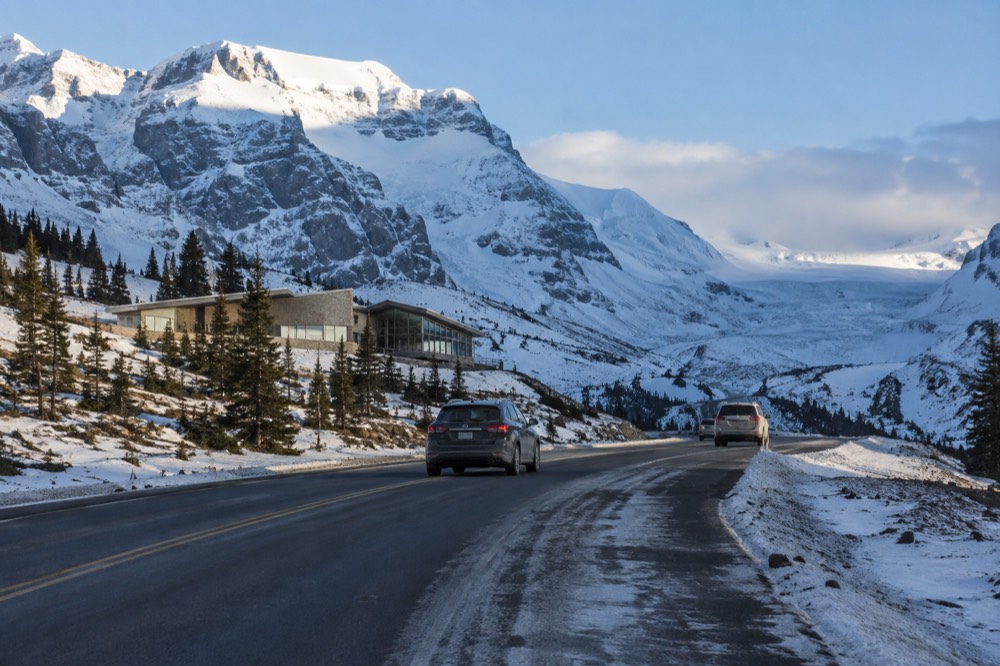
Parks Canada's own advice on travelling the parkway is to treat it as a destination rather than a route. The full stop list, with the distances Parks Canada publishes, is in the next section. For a deeper treatment of the road itself, including what a one-day attempt realistically holds, our companion piece on driving the Icefields Parkway breaks the corridor down stop by stop.
What will you actually pass on the Icefields Parkway?
Heading north from Lake Louise you pass Bow Lake and the 8 to 11 percent grades around it, then Sunwapta Falls at 179 km from Lake Louise, then the Columbia Icefield and Athabasca Glacier at the Icefield Centre, then Athabasca Falls 203 km from Lake Louise, and finally the broad Athabasca valley into Jasper. The glacier is the headline; the waterfalls are the surprise.
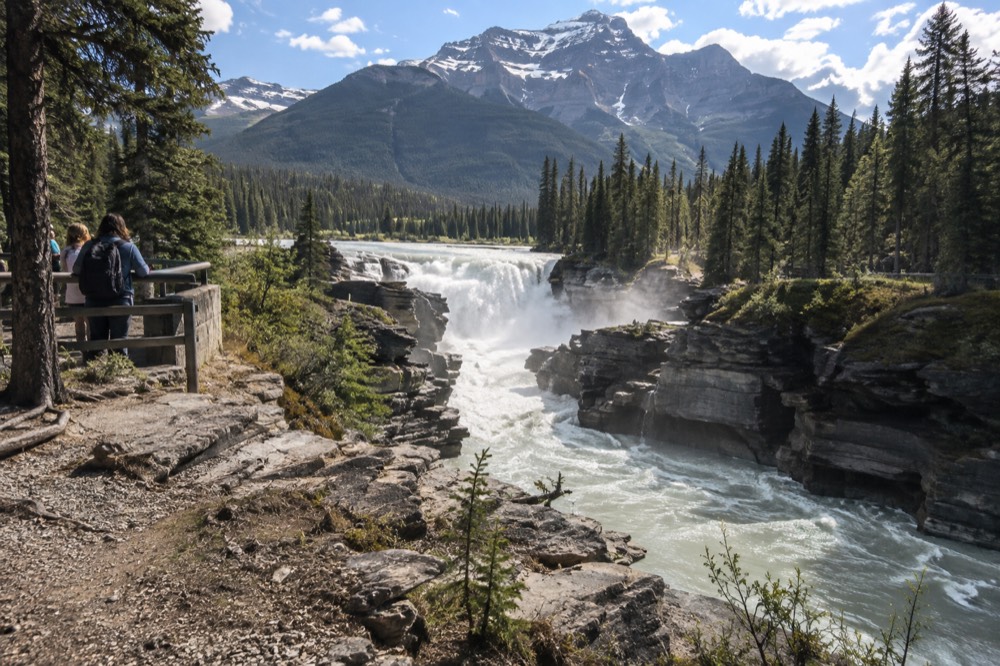
Sunwapta Falls is a stepping waterfall where the smaller hanging Chaba Valley meets the larger Athabasca Valley, carved when glacier ice receded 8,000 years ago. It is 54 km from Jasper. Athabasca Falls, 30 km from Jasper, is 23 metres high, which Parks Canada notes is not very high by Canadian Rockies standards, but the size of the river makes it one of the most powerful falls in the mountain national parks. Both day-use areas and trails are open.
Between them sits the Columbia Icefield, the largest icefield in the Canadian Rockies, more than 300 km² of ice, with the Athabasca Glacier spilling over three giant bedrock steps right beside the road. Parks Canada calls the glacier Canada's most accessible glacier, and it has been receding for the last 125 years. The dated figures are stark: from 1985 to 2024, Jasper lost 21.8 percent of its total glacier mass, and over the same period the Columbia Icefield alone lost nearly 13.3 percent of its ice.
| Stop, travelling north | Distance from Jasper | Distance from Lake Louise | What it is |
|---|---|---|---|
| Bow Lake area | not published as a stop distance | not published | Steep grades, lake viewpoints |
| Sunwapta Falls | 54 km | 179 km | Stepping waterfall and limestone gorge |
| Icefield Centre and Athabasca Glacier | 103 km | not published as a stop distance | Largest icefield in the Canadian Rockies, glacier access |
| Athabasca Falls | 30 km | 203 km | 23 m falls over quartzite, potholes and canyon |
| Jasper townsite | 0 km | 232 km | End of the parkway |
The glacier stops are where most of the money and most of the time on this drive get spent, and they are the reason the drive-versus-tour question exists at all. If you already know the icefield is your main event, the Columbia Icefield tours guide compares every way onto the ice.
The three products below are the ones this site would put in front of a Banff-to-Jasper driver first: the full Ice Explorer and Skywalk combo, the cheaper Skywalk-only admission, and a small-group Jasper canoe trip for the day after, when your legs want something gentler than a glacier.
Do you need a park pass to drive the Icefields Parkway?
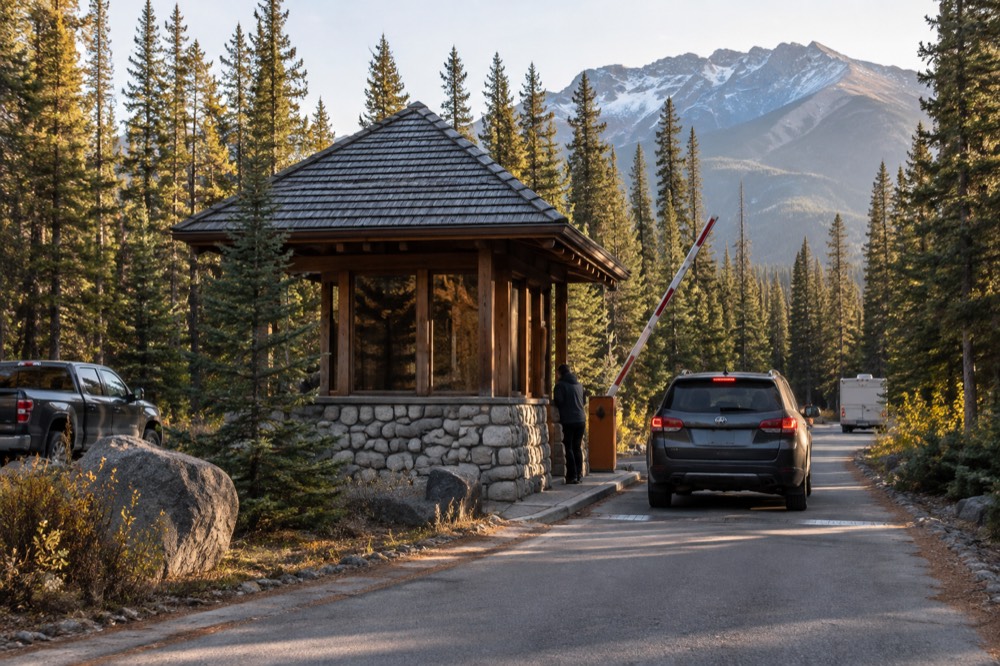
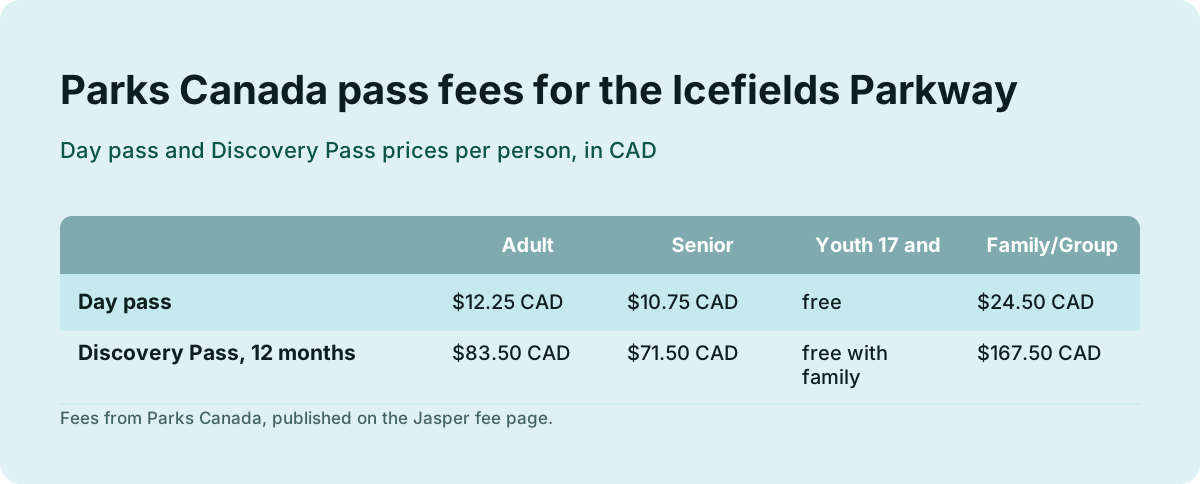
Yes, and it is not optional. A park pass is legally required to travel within Jasper National Park, including driving the Icefields Parkway, and Parks Canada states this on both of its parkway pages. The daily fee is charged per person, Adult $12.25 CAD, Senior $10.75 CAD, Youth 17 and under free, with a Family/Group cap of $24.50 CAD covering up to seven people in one vehicle.
The Family/Group cap is what makes the fee behave like a per-vehicle charge for most travelling parties: two adults at $12.25 already add up to $24.50, so any group of two or more paying adults hits the cap immediately. A day pass is valid until 4 pm the day after purchase and admits the holder to Jasper, Banff, Kootenay, Yoho, Mount Revelstoke, Glacier, Waterton Lakes and Elk Island national parks, so one pass covers both ends of this drive. It does not cover national historic sites.
Parks Canada raises these fees annually, so check the official fee page at parks.canada.ca/pn-np/ab/jasper/visit/tarifs-fees before you budget. If your itinerary adds up to roughly seven or more park days within a year, the Discovery Pass crosses over: an adult pass at $83.50 CAD equals 6.8 adult day passes, and the Family/Group pass at $167.50 CAD equals 6.8 family day passes.
| Pass type | Adult | Senior | Youth 17 and under | Family/Group, up to 7 in one vehicle |
|---|---|---|---|---|
| Day pass | $12.25 CAD | $10.75 CAD | free | $24.50 CAD |
| Discovery Pass, 12 months | $83.50 CAD | $71.50 CAD | free with family | $167.50 CAD |
One point this site will not blur for you: whether a tour ticket includes the park pass varies operator by operator. Parks Canada charges commercial tours a group rate of $10.42 CAD per person, and each operator decides whether to build that into the ticket price or leave you to buy your own pass. A tour's own inclusions list is the only authority for that tour. Our Jasper National Park entry fee guide covers the whole fee schedule, including the free-entry categories that still apply.
There is one genuinely pleasant difference from Banff, and it is verified: Jasper has no timed entry system, no reserved-access corridor and no mandatory shuttle for any attraction. The only authorization required to travel anywhere in the park is the Park Pass itself. Banff's Lake Louise and Moraine Lake shuttle apparatus has no equivalent here, so you can drive this corridor without booking a road slot.
Is it better to drive yourself or take a guided day tour?
Driving yourself costs a park pass, a rental vehicle and a full day of mountain-road concentration with no cell coverage and, in winter, no services at all. A guided day tour from Jasper runs from $248.08 for a 7 hour 15 minute small-group trip that includes the glacier stops and Athabasca Falls, with free cancellation. The honest difference is not money, it is who is watching the road while everyone else watches the peaks.
Here is the fatigue case, stated plainly. The Icefields Parkway demands continuous attention: steep grades, wildlife on the roadway, weather that can change between Bow Lake and Sunwapta Pass. The driver of a self-drive party sees the road and misses a meaningful share of the scenery. On a guided day, every passenger gets the full 232 km, and a guide adds the interpretive layer: why the Chaba River burn, the legacy of a 1967 wildfire beyond Sunwapta Falls, is now some of the best bear and moose habitat in the park, or why Mount Snowdome on the icefield is one of only two hydrological apexes in North America, where water flows to the Pacific, Arctic and Atlantic.
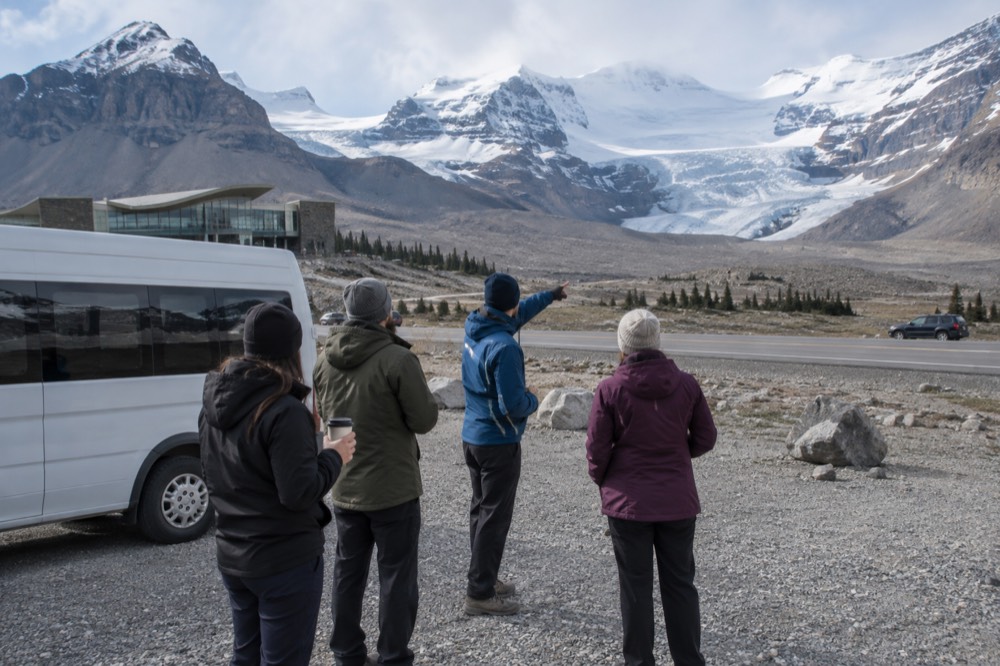
The strongest single-product argument for the guided side is the Jasper to Banff day tour: 10 hours, from $212.20, running the parkway with stops at Maligne Canyon, Athabasca Falls and the Banff townsite, with free cancellation. It solves the one-way problem that self-drivers face, because it turns the transfer itself into the tour. If you are moving from Jasper to Banff, or want the corridor without the wheel, it is the cleanest fit on the roster.
For parties starting in Jasper who want the glacier as the centrepiece, the 7 hour 15 minute Columbia Icefield tour with glacier Skywalk, from $248.08 and rated 4.6 across 213 reviews, covers the Athabasca Glacier, the Skywalk and Athabasca Falls in one guided loop. Solo drivers can beat that price, but not after adding the vehicle, the pass and the Ice Explorer ticket, which is where the arithmetic usually lands.
| Option | Upfront cost per adult | Time commitment | Who it suits |
|---|---|---|---|
| Self-drive the parkway | Vehicle rental plus $12.25 CAD day pass | Your own schedule | Photographers and slow travellers who want full control |
| Ice Explorer and Skywalk combo, self-drive add-on | From $95.17 plus your own driving | On the listing | Drivers who want glacier time without a guide |
| Guided 7 hour 15 min icefield day from Jasper | From $248.08 | 7 hours 15 minutes | Visitors who want the story, not just the stops |
| Jasper to Banff guided day | From $212.20 | 10 hours | Anyone moving between the towns who wants the drive included |
What is winter driving on the Icefields Parkway like?
The parkway does not close for winter, but from 1 November to 31 March every vehicle on it must have snow tires or chains, there are no services along it at all, no cell coverage en route, and it is not salted, so the surface is often compact snow with maintenance running only 7 am to 3:30 pm. Winter here is a commitment, not a scenic cruise.
That list is Parks Canada's own, and every item on it changes the plan. No services means no fuel, no food and no washrooms between the two ends in winter. No cell coverage means a breakdown is a wait for the next passing vehicle. Snow tires must carry a snowflake or M+S symbol. Road reports describe the worst condition a driver may meet over the road's whole length, so a "poor" report may describe one stretch, not all 232 km. The rest of the planning pages sit on Jasper National Park Tours.
Before any winter drive, check 511.alberta.ca for conditions and Parks Canada's road page at parks.canada.ca/pn-np/ab/jasper/visit/routes-roads for seasonal restrictions. Parks Canada warns explicitly that navigation apps are not always accurate for Jasper National Park, so trust the official sources over the map on your phone.
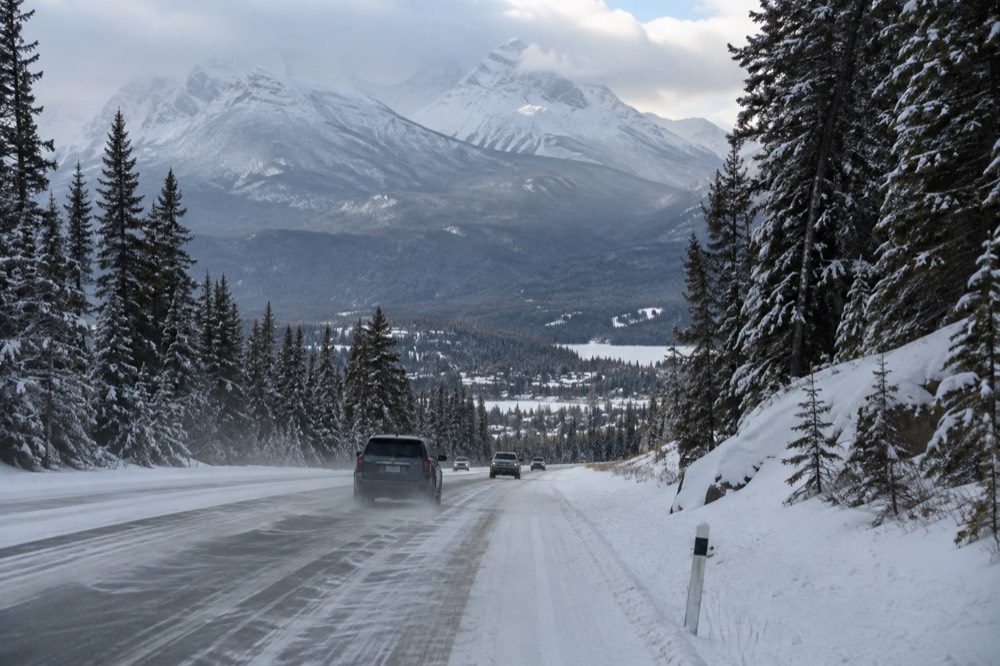
Winter does have a quiet compensation: bighorn sheep, mountain goats, coyotes and deer are commonly sighted along the parkway in winter, and a 20 km stretch of the road runs through the winter habitat of the Jasper herd of woodland caribou, a species at risk. A sighting is never a guarantee, and the roadside rules apply year round: stay in your vehicle, pull over only where it is safe, and move on if a traffic jam develops. Our Jasper winter tours guide covers the season's guided options.
Where should you stop at the Columbia Icefield?
The Icefield Centre sits 103 km south of Jasper on Highway 93, beside the Athabasca Glacier, and it is the stop the whole drive is named for. The two ways to spend money there are the Ice Explorer, which drives onto the glacier itself, and the glass-floored Skywalk over the Sunwapta Valley, sold as a combo from $95.17 or as Skywalk-only admission from $37.01.
The combo ticket, rated 4.5 across 3,187 reviews, is the standard choice: it pairs the Ice Explorer ride onto the Athabasca Glacier with the Columbia Icefield Skywalk, with the Discovery Centre as the base. The Skywalk-only admission, from $37.01 and rated 4.4 across 1,050 reviews, suits travellers who want the cliff-edge view without stepping onto ice, or who are short on time. Both are weather-dependent products in a place where the weather changes fast.
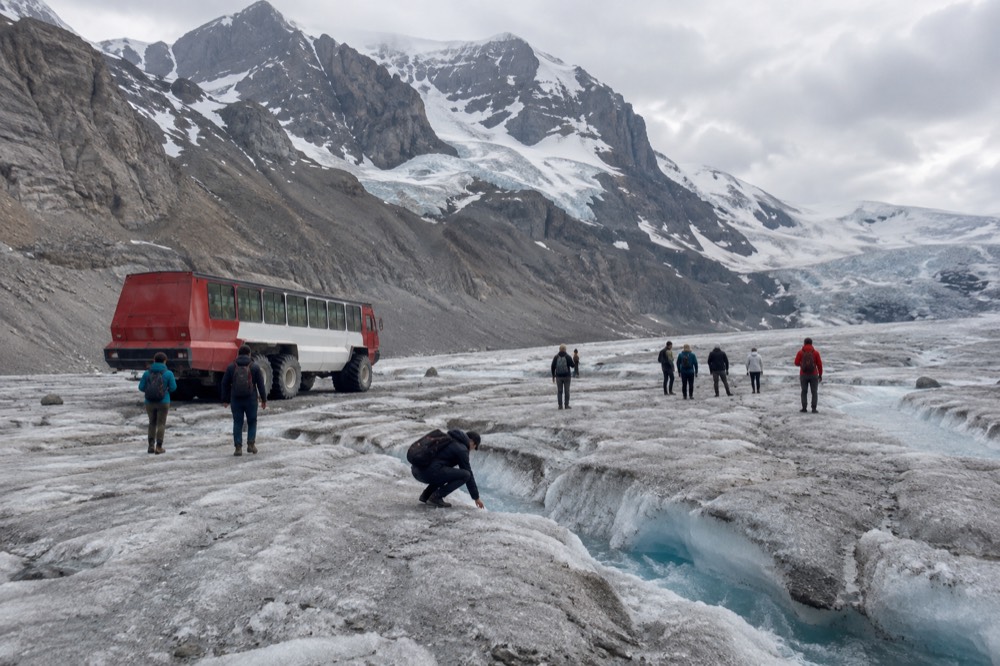
Safety framing matters here, in Parks Canada's own words: the glacier is dangerous, people have been killed falling into hidden crevasses, and the barriers exist for a reason. Stepping onto the ice with a licensed operator is the sanctioned way to do this; wandering past the barriers on foot is not. Ice caves formed by summer meltwater should not be entered either.
Timing matters too. The Columbia Icefield Adventure season runs 1 May to 12 October in 2026, weather dependent, so a shoulder-season or winter self-driver will find the glacier rides shut down even though the road itself is open. If your trip falls outside that window, the drive is still spectacular, but plan for viewpoints rather than ice time.
What does the 2024 wildfire change about the drive?
The burn is visible along the Athabasca valley south of town, at the townsite's southwest edge and up the Maligne road corridor, and regrowth is under way, but two specific places remain closed for the 2026 season: Cavell Road with its Edith Cavell trails, and Maligne Canyon, both prohibited to all access. Parks Canada has not set a reopening date for either.
The fire itself is history now: it started on 22 July 2024, was declared extinguished on 1 April 2025, and burned a final 32,722 hectares. Parks Canada's own summary of the park's state is that "the majority of Jasper National Park is now open and ready to explore" and "virtually all of Jasper's trails have now reopened". The town saved 70 percent of its structures, including all critical infrastructure. The drive delivers an honest lesson in fire ecology, not a ruin.
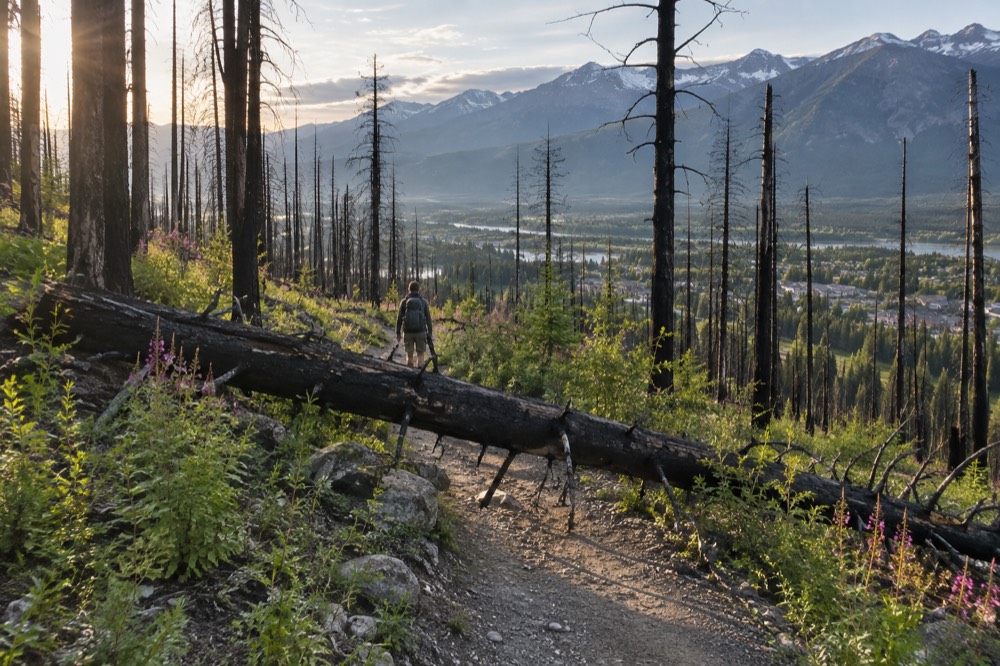
The two closures do affect planning. Cavell Road is closed to all travel, motorised or not, because slope stability work is planned from autumn 2026 through spring 2027, and the opening date will be set only once that work is finished. Maligne Canyon is closed from First Bridge to Fifth Bridge, and winter access for winter recreation is prohibited outright, which means no canyon ice walk this season. Check the park recovery page at the Parks Canada recovery site before you plan around either. For the full picture of what is open and closed, see our is Jasper open after the wildfire guide.
Fire bans and air quality change through the season, so check Parks Canada's Jasper fire page and albertafirebans.ca before you go rather than trusting any page, including this one, on today's conditions.
Can you do the Banff to Jasper drive in one day?
Yes, and thousands do, but one day means choosing between the south half of the parkway, centred on the icefield, and the north half, centred on the waterfalls, because doing all 232 km with real time at each stop does not fit. The one-day versions that work are either a Jasper-based icefield loop or the one-way Jasper to Banff guided day.
The self-drive one-day plan most guides converge on: leave early, drive south from Jasper with stops at Athabasca Falls and Sunwapta Falls, spend the middle of the day at the Icefield Centre, and return. That is a full day, and it is the shape the 7 hour 15 minute guided tour takes for you. The one-way version, ending in Banff, is what the 10-hour guided day exists for, and it is also the answer to the question of whether the drive works as a transfer. It does, once.
What a one-day attempt should not include: Maligne Lake, which is a separate valley east of Jasper and a 90-minute drive from town on its own road, and Miette Hot Springs, which is 61 km east of the townsite. Those belong to a second Jasper day, not to parkway day. If you are building a longer itinerary, our how many days in Jasper guide sequences the whole park.
The practical one-day question for most travellers is whether the second half of the drive, the part south of the icefield toward Lake Louise, is worth the extra hours. It is: Bow Lake and the grades around it are among the most photographed stretches in the Rockies. But it is the part you sacrifice first when time runs short, and a one-way guided day is the only way to have it without driving it twice.
Where should you stay the night if the drive splits into two days?
Splitting the drive means sleeping at one end or the other, because there is no hotel on the parkway itself: the only roofed accommodation along the corridor is at the ends, in the Jasper townsite or around Lake Louise and Banff. Most splitters sleep in Jasper, where the townsite's hotels sit inside the park, and give the icefield a full second day.
The case for basing in Jasper is the case this site makes throughout: the town is inside the park, the Maligne Valley and the icefield are both day trips from it, and the evening options, from the SkyTram's upper station at 2,263 metres to the dark-sky skies of the world's second-largest dark-sky preserve, are all local. The case for Banff is the reverse commute, and it only makes sense if Jasper is a detour rather than a destination.
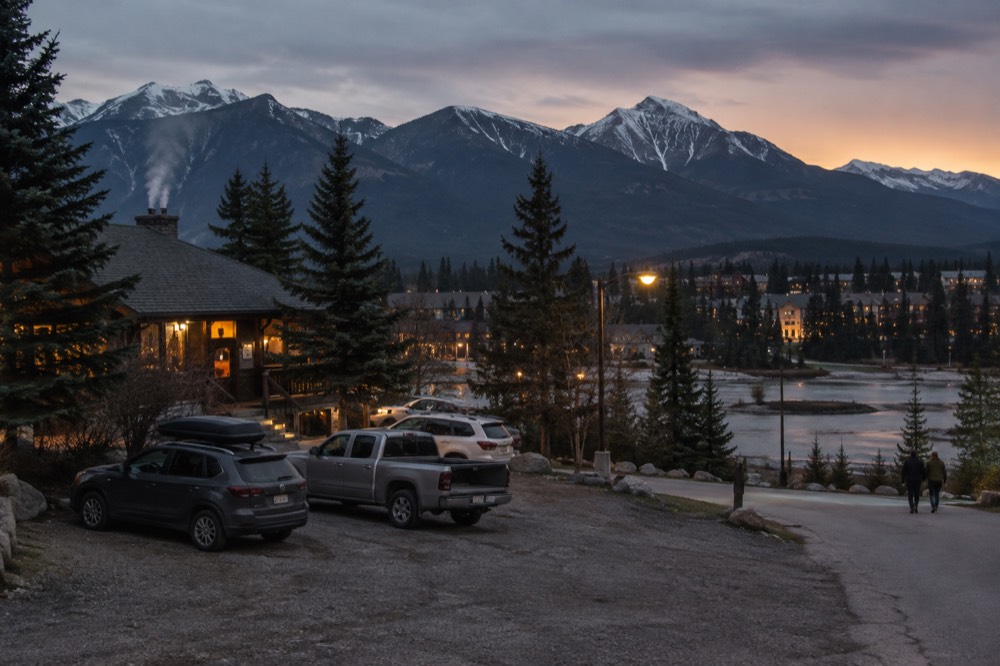
Whichever end you choose, book accommodation before you book anything else. Jasper's hotel inventory is still recovering from the 2024 wildfire, and Parks Canada states that 2025 visitation remained below pre-wildfire levels partly because of reduced accommodation availability. Our where to stay in Jasper guide covers the neighbourhoods and the trade-offs, and it is worth reading before you commit the nights.
By now the pattern in this guide should be clear: the drive is the easy part, and the decisions around it, the pass, the glacier ticket, the nights, are where a little planning pays for itself. If you want help with the whole corridor rather than just the Jasper end, the one-day Icefields Parkway question is answered in full on our blog, and the Jasper to Banff guided day remains the one product that dissolves the decision entirely.
Common questions about the Banff to Jasper drive
How far is the drive from Banff to Jasper?
The Icefields Parkway is 232 km between Lake Louise and the Jasper townsite. Banff lies further south along the Trans-Canada corridor. Jasper is 404 km northwest of Calgary and 370 km west of Edmonton. No primary source publishes a driving time, so plan by distance and by your stop list.
Do you need a park pass to drive the Icefields Parkway?
Yes. Parks Canada states on both of its parkway pages that a valid national parks pass is required to drive the Icefields Parkway, and a pass is legally required to travel within Jasper National Park generally. The daily fee is $12.25 CAD per adult with a Family/Group cap of $24.50 CAD for up to seven people in one vehicle.
Does the Icefields Parkway close in winter?
No. It has no seasonal closure, and Parks Canada publishes a dedicated page on driving it in winter. From 1 November to 31 March snow tires or chains are mandatory, there are no services along the route, there is no cell coverage, and maintenance runs 7 am to 3:30 pm. Check 511 Alberta before you drive.
Can you do the Banff to Jasper drive in one day?
Yes, but you will have to choose your stops rather than attempt everything. The realistic one-day shapes are a Jasper-based loop to the icefield and back, or a one-way guided day from Jasper to Banff, which runs 10 hours and includes Maligne Canyon and Athabasca Falls stops.
Is it better to drive yourself or take a tour?
It depends on what you value. Self-drive gives full control and costs a rental vehicle, a park pass and your own concentration on a demanding mountain road. A guided day from Jasper runs from $248.08 for a 7 hour 15 minute icefield tour with the glacier and Athabasca Falls included, and every passenger gets the scenery.
What is the best stop on the Icefields Parkway?
The Columbia Icefield, 103 km south of Jasper, is the headline: the largest icefield in the Canadian Rockies with the Athabasca Glacier beside the road. Athabasca Falls, 30 km from Jasper, and Sunwapta Falls, 54 km from Jasper, are the two most accessible waterfall stops, and both day-use areas are open.