What Should I Wear To Columbia Icefield?
A practical packing answer for the Columbia Icefield: layers, footwear, sun protection and what changes if you are riding the Ice Explorer, walking the Skywalk or hiking on the Athabasca Glacier.
What Should I Wear To Columbia Icefield?
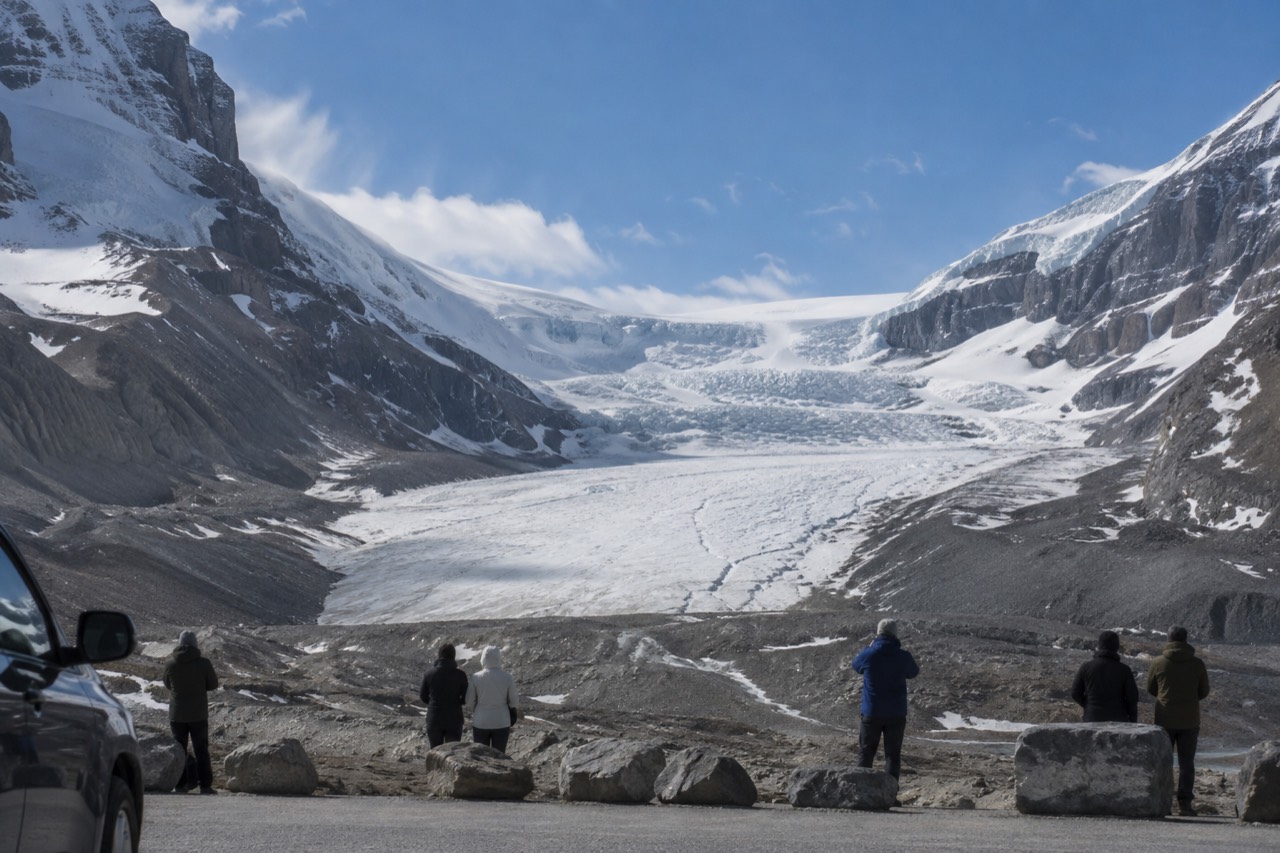
Wear three layers on top, windproof and waterproof shell layers, warm trousers, insulated waterproof boots with good tread, a hat and gloves in every month, and full sun protection including sunglasses. The Icefield sits 103 km south of Jasper on Highway 93, high enough that wind and glare, not air temperature, are what actually decide whether you are comfortable.
The single biggest packing mistake at the Columbia Icefield is dressing for Jasper. The townsite sits at just over 1,000 metres of elevation; the Icefield Centre and the Athabasca Glacier sit dramatically higher, in an exposed bowl of rock and ice where the wind funnels down the Sunwapta Valley. A calm, warm morning in town can be a cold, blowing afternoon on the glacier forefield. Jasper's own climate record, the Canadian Climate Normals for 1991 to 2020 from Environment and Climate Change Canada, shows July and August as the warm months, but those numbers are measured at the townsite station, not on the ice.
The second mistake is skipping sun protection. Snow and ice reflect sunlight from below while the thin high-altitude air filters less of it from above, so a sunny day on the glacier can burn exposed skin faster than a beach. Sunglasses are not a fashion choice here. The glare off the ice is constant, and Parks Canada's own glacier pages warn that the terrain is dangerous and that hidden crevasses are lethal, which is also why the barriers around the Athabasca Glacier exist and why stepping onto the ice without a guide is not something this site recommends. For the clothing question specifically, the answer is a layering system you can adjust every hour as the wind changes.
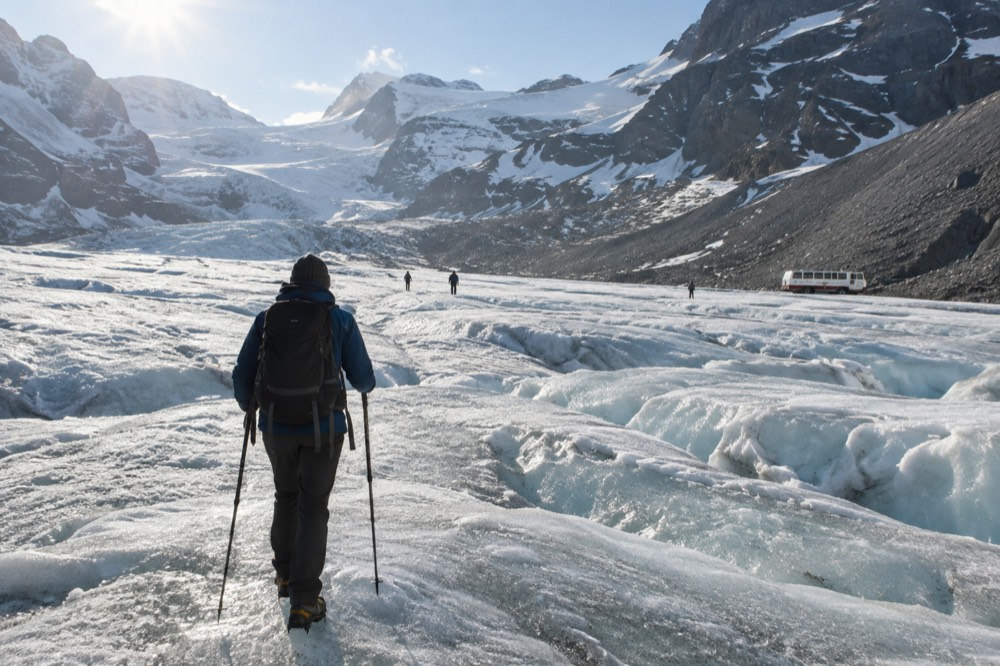
If you are still choosing how you will actually experience the Icefield, the clothing answer shifts a little depending on the format. A bus-based tour with a short guided walk needs less gear than a three or four hour hike on the ice itself.
How cold does it actually feel on the Athabasca Glacier?
Even in July, the glacier surface holds ice year round and the wind across it can drop the felt temperature close to freezing, so plan for a 10 to 15 degree gap between Jasper and the ice. Count on a warm base layer, a mid layer you can strip off, and a shell that blocks wind, and you will cover almost every condition the Icefield produces in summer.
Start with the base layer. A synthetic or merino short or long sleeve against the skin beats cotton, because cotton holds sweat and then turns cold the moment the wind picks up. Over that, a fleece or light insulated mid layer gives you the adjustable warmth: on, when you are standing at the Skywalk or riding the Ice Explorer down to the ice; off, when you are hiking uphill in full sun. The outer layer should be a windproof and ideally waterproof shell. Rain showers move through the Icefield area quickly, and the mist near the glacier edge is wetting on its own.
Trousers matter more than most visitors expect. Shorts on the glacier are a common sight and a common regret. The ice radiates cold, the wind is constant, and if you kneel to take a photograph your knees will find out fast. Softshell or quick-dry hiking trousers are the right call, with thermal leggings underneath if you run cold or if you are booked on a longer guided hike like the IceWalks or Tread Lightly programs, which spend three to four hours out on the ice.
Hands and head are the last pieces. A light hat and thin gloves take almost no space in a daypack and solve the two body parts that lose heat fastest in wind. This is not winter gear; a simple beanie and liner gloves are enough for summer. If you are visiting in the shoulder months, May, early June, late September or October, upgrade both: a warmer hat and insulated gloves, because the shoulder season at this elevation can genuinely feel like winter. The Columbia Icefield Adventure season runs 1 May to 12 October, weather dependent, so those are the realistic edges of a visit. Our guide to the best time to visit Jasper covers how those months differ in the park more broadly.
Wondering whether a guided glacier hike is worth adding to your trip at all?
What footwear works on the ice?
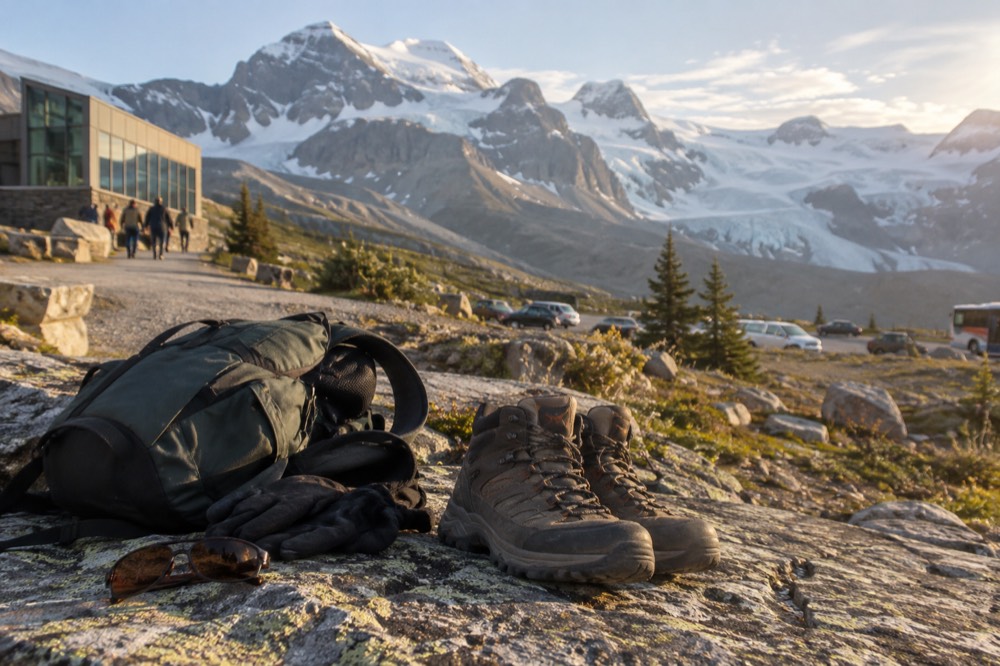
Wear insulated, waterproof hiking boots with deep lugs and stiff soles; running shoes, fashion sneakers and smooth-soled shoes are the wrong choice on glacier ice and wet rock. If your tour supplies crampons, the operator will brief you on fitting them, and a boot with a reasonably stiff sole holds a crampon far better than a soft trail shoe.
Footwear is where the tour format really changes the answer. On the Ice Explorer, you step out onto a prepared area of the Athabasca Glacier for a short guided walk, and the surface is packed snow and ice where any sturdy shoe with grip will do, though warm socks still matter. On the glass-floored Columbia Icefield Skywalk you are on a fixed walkway, so grip is irrelevant and comfort is the whole question. On a guided glacier hike, the operator provides traction: the Tread Lightly 4-hour hike and the IceWalks guided glacier hike both put you on the actual ice with proper equipment, and their listings confirm the Athabasca Glacier as the destination. Stiff-soled boots make crampons feel stable; soft shoes make them feel wobbly. More of these guides are collected on Jasper National Park Tours.
Socks deserve a sentence of their own. A single pair of wool or synthetic hiking socks, not cotton, keeps feet warm even if the boots are not fully insulated. Two thin pairs beat one thick pair for blister avoidance on a longer hike. And pack a spare pair in the car: wet feet on the drive back down the Icefields Parkway are a small misery that is entirely avoidable.
If you are weighing the two most popular ways onto the ice, the guided hike and the Ice Explorer vehicle, the clothing demands are the real difference between them. The vehicle tour is short and sheltered; the hike is hours of exposure, and the same outfit that was fine for the first is thin for the second.
What should you pack beyond clothing?
Pack sunglasses and sunscreen as non-negotiables, a warm hat and gloves, a water bottle, snacks, and a small dry bag or pack cover for showers; bring a camera with a strap you can secure. Nothing on this list is exotic, and every item earns its place on the ice or at the Skywalk viewpoint.
Sun protection first, because it is the item people forget. Glacier glare is intense and comes from below as well as above, so sunscreen goes on the underside of your chin and the bottom of your nose too, not just the usual spots. Lip balm with SPF saves a surprising amount of discomfort. Sunglasses should wrap a little or sit close to the face; the sideways glare off the ice finds the gaps in wide, flat lenses.
Water and food come next. There are services at the Icefield Centre, but a day on the Icefields Parkway between Jasper and the Icefield is long, the drive alone is 103 km each way, and hiking on ice burns energy faster than the distance suggests. A reusable water bottle, a couple of granola bars and a real snack for the drive are enough. If you are planning the full parkway route, our piece on food along the Icefields Parkway covers where the services actually are.
The last category is weather contingency. A packable rain shell, a dry bag for electronics, and a spare warm layer left in the vehicle cover the Icefield's habit of delivering four seasons in an afternoon. Parks Canada's Columbia Icefield area page is the right source for current area conditions and closures before you drive south, and the official road guidance at 511 Alberta is the one to check for the parkway itself, because Parks Canada warns that navigation apps are not always accurate for Jasper National Park.
Here is the full packing list in one place, matched to the three ways visitors most often experience the Icefield. Treat it as a checklist rather than a menu: the items in the first two columns are cheap insurance, and the ones in the guided-hike column are what stand between a great day and a cold one.
| Item | Skywalk only | Ice Explorer and Skywalk | Guided glacier hike |
|---|---|---|---|
| Base layer | Comfortable shirt | Synthetic or merino base layer | Synthetic or merino base layer |
| Mid layer | Light fleece or puffy | Fleece or insulated mid layer | Fleece plus spare mid layer |
| Shell | Windproof layer | Windproof and waterproof shell | Windproof and waterproof shell |
| Trousers | Any comfortable trousers | Quick-dry hiking trousers | Hiking trousers plus thermal leggings |
| Footwear | Any walking shoe | Sturdy boots with good tread | Insulated waterproof boots, stiff sole |
| Hat and gloves | Light hat recommended | Light hat and liner gloves | Warm hat and insulated gloves |
| Sunglasses and sunscreen | Essential | Essential | Essential, reapplied |
| Water and snacks | Optional | Water bottle and snacks | Extra water and real food |
| Spare clothing in vehicle | Rain shell | Rain shell and spare socks | Full spare layer set |
Does what you wear change with the tour you pick?
Yes: the Skywalk needs only comfortable walking clothes and a warm layer, the Ice Explorer adds a need for real boots and gloves for the short time on the ice, and a guided glacier hike demands the full layering system, proper boots and sun protection for three to four hours of exposure. Match the outfit to the format.
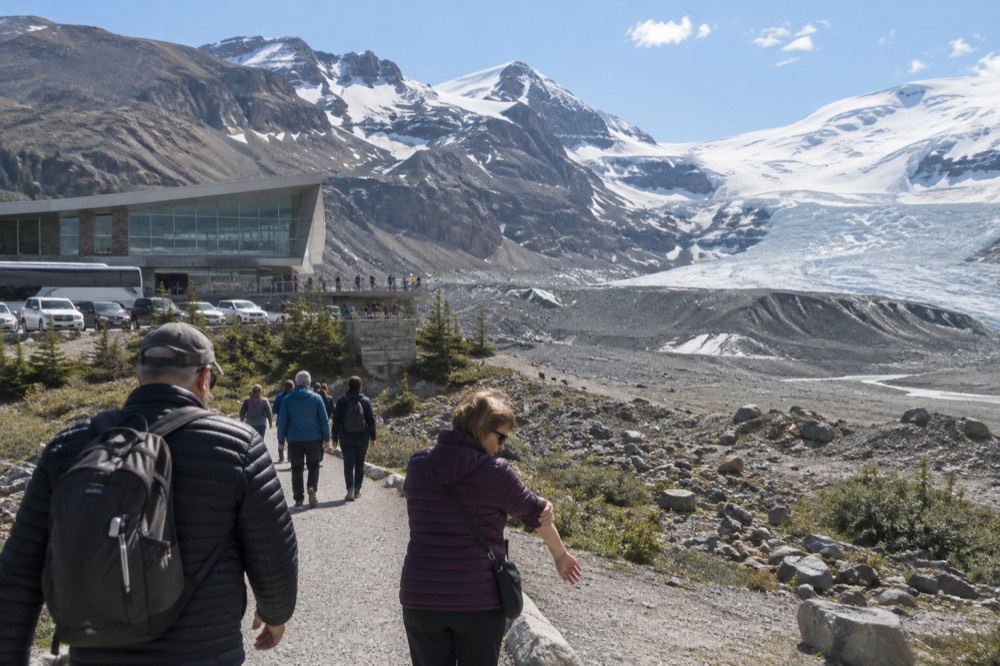
The split is simple. The Columbia Icefield Skywalk is a fixed, glass-floored walkway over the Sunwapta Valley, reached from the Icefield Centre; you walk it at your own pace in whatever you like, though the wind on that structure is real and the view stops people for longer than they plan, so the warm layer should stay on. The Ice Explorer and Skywalk combo ticket, 4.5 across 3,187 reviews and from $95.17, puts you on the glacier itself for a shorter guided stretch, and that is where boots and gloves start earning their keep.
The guided hikes are another level. The Tread Lightly 4-hour hike, from $135.25, spends its full four hours on and around the Athabasca Glacier, and the IceWalks guided glacier hike, from $101.57, runs three hours on the ice. Both operators supply the technical gear for the ice; your job is the clothing underneath it. Everything in the sections above applies to these in full, with one addition: bring more water than you think you need, because hours on ice under high sun dehydrate people quietly.
One planning note that sits outside clothing but belongs in any packing conversation: a park pass is legally required to be inside Jasper National Park, including to drive the Icefields Parkway, and the daily admission fee is charged per person, with a Family/Group rate of $24.50 CAD covering up to seven people arriving in one vehicle. Whether a specific tour builds that fee into its ticket is an operator-by-operator decision, so check the inclusions on the operator's live listing rather than assuming either way. Our guide to the Jasper National Park entry fee breaks the pass options down.
Common questions about what to wear to Columbia Icefield
What Should I Wear To Columbia Icefield?
Three layers on top, a windproof and waterproof shell, warm hiking trousers, insulated waterproof boots, a hat and gloves in every month, and sunglasses plus sunscreen without exception. The gap between the Jasper forecast and the felt conditions on the ice is the whole reason the layering system matters.
Do I need winter boots for the Columbia Icefield in summer?
For the Skywalk alone, no; any comfortable walking shoe works on the fixed walkway. For the Ice Explorer and especially for a guided glacier hike, yes: insulated, waterproof boots with deep lugs and a stiff sole are the right footwear on ice and wet rock.
Is a jacket necessary if the forecast looks warm?
Yes. The Icefield is 103 km south of Jasper at high elevation, the wind across the glacier is constant, and the ice surface holds cold air. A windproof layer you can put on and take off is the most useful single item you can carry.
Should I bring gloves and a hat in July?
Bring both. They weigh almost nothing and the two fastest places to lose heat in wind are your head and hands. A light beanie and thin liner gloves are enough for summer; reserve insulated versions for May, early June, late September and October.
Do the glacier tours provide cold-weather gear?
Guided glacier hikes such as the IceWalks and Tread Lightly programs supply the technical equipment for walking on ice, including traction, but not your clothing. The vehicle-based Ice Explorer experience provides no personal gear at all, so your own layers and boots are what you get.
What should I not wear to the Columbia Icefield?
Skip cotton base layers, shorts, smooth-soled sneakers, fashion boots and anything you cannot move in. Cotton holds sweat and turns cold, bare legs find the ice-radiated cold fast, and slick soles on ice or wet rock are how minor accidents happen.
If your Icefield day is part of a longer stay, the trio below covers the three formats visitors most often combine: a guided glacier hike, the Ice Explorer and Skywalk combo, and a gentler paddling day on Pyramid Lake back near town.