How Long Does It Take To Drive The Icefields Parkway From Banff To Jasper?
The Icefields Parkway covers 232 km between Lake Louise and Jasper. Here is what that distance actually takes once you factor in stops, construction, wildlife and winter rules.
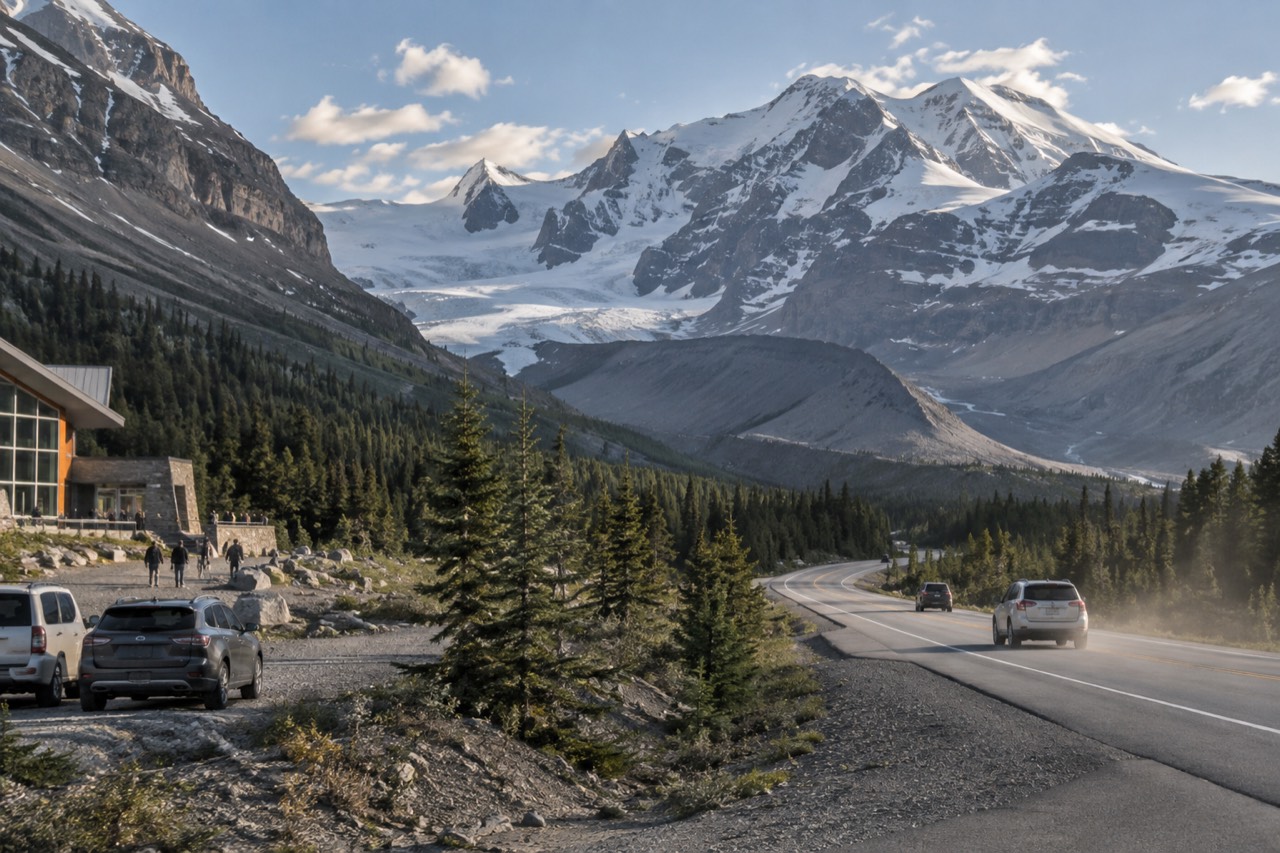
The Icefields Parkway is 232 km of road between Lake Louise and the Jasper townsite, and Parks Canada publishes that figure plainly. What no primary source publishes is a driving time from Banff, Lake Louise, Calgary or Edmonton, and this site will not invent one. What can be said honestly is that almost nobody drives this road in the hours a mapping app suggests, because the parkway is not a corridor you endure to reach somewhere else. It is the destination, and the stops are the point.
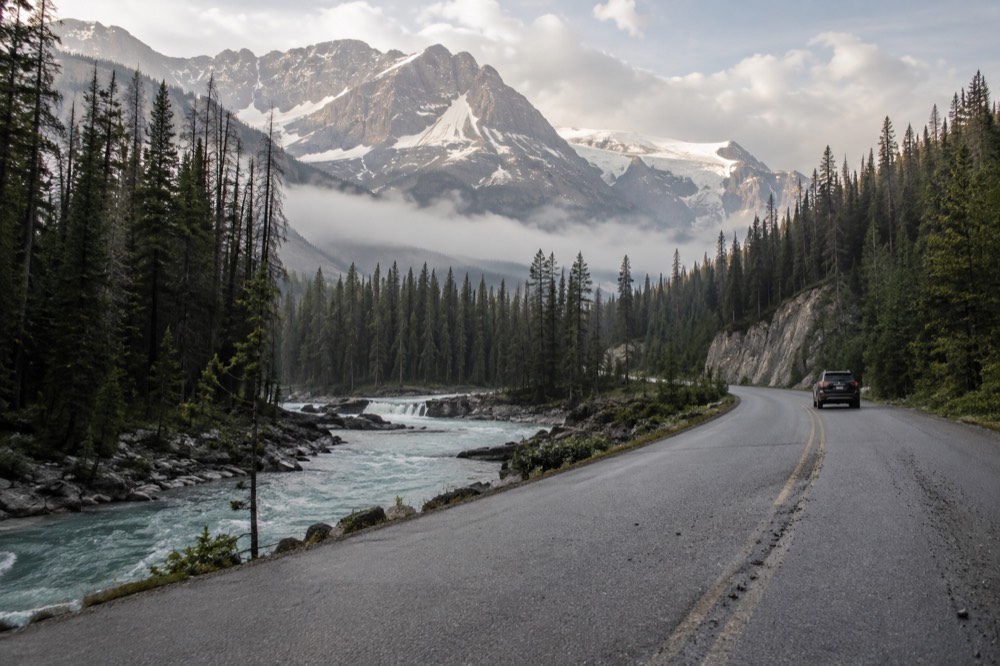
How Long Does It Take To Drive The Icefields Parkway From Banff To Jasper?
No official source gives a driving time for the Icefields Parkway, and any number you have seen is an estimate, not a fact. The verified distance is 232 km between Lake Louise and the Jasper townsite, plus roughly the Banff to Lake Louise leg before the parkway even starts. Most travellers who stop at the major sights spend a full day on this drive, and the ones who enjoy it most plan it that way from the outset.
The honest framing starts with what Parks Canada actually says. The parkway, Highway 93 North, connects Lake Louise in Banff National Park with the Jasper townsite over 232 km, and a valid national parks pass is required to drive it. That pass point matters more than most visitors expect: the daily admission fee is charged per person, Adult $12.25 CAD, Senior $10.75 CAD, Youth 17 and under free, with a Family/Group daily rate of $24.50 CAD covering up to seven people arriving in a single vehicle. Two adults at $12.25 already equal the $24.50 family cap, so for any group of two or more paying adults the fee behaves like a per-vehicle charge. The Canada Strong Pass free-admission period ended on 7 September 2026, so regular fees apply now. The current fee schedule lives on the Parks Canada fee page, which raises these figures annually.
Then there is the arithmetic of the stops. Bow Lake, Peyto Lake, the Columbia Icefield, Athabasca Falls and Sunwapta Falls sit along the route, and each one pulls a driver out of the car for anywhere from twenty minutes to half a day. The Icefield Centre alone is 103 km south of Jasper on Highway 93. Add a glacier hike or the Skywalk, and the drive stops being a drive at all. That is the gap between the map's estimate and reality, and it is why many travellers hand the wheel to someone who drives this road for a living. The trio below spans the three ways people usually spend that middle stretch of the parkway: on the ice itself, at the Skywalk, or out on Maligne Lake at the Jasper end.
If you are weighing the same choice, the planning guide to Icefields Parkway tour options breaks down what each operator actually stops at, and the question of whether the parkway fits in one day is worth settling before you book anything at either end.
What actually adds hours to the drive?
The three things that stretch the Icefields Parkway past a mapping estimate are the signed stops, the wildlife, and the road's own rules: a 90 km/h maximum speed limit, lower in places for wildlife, no services in winter, and no cell coverage anywhere along the route. Each one is a reason the drive takes longer than the distance suggests, and each one is also the reason to drive it yourself.
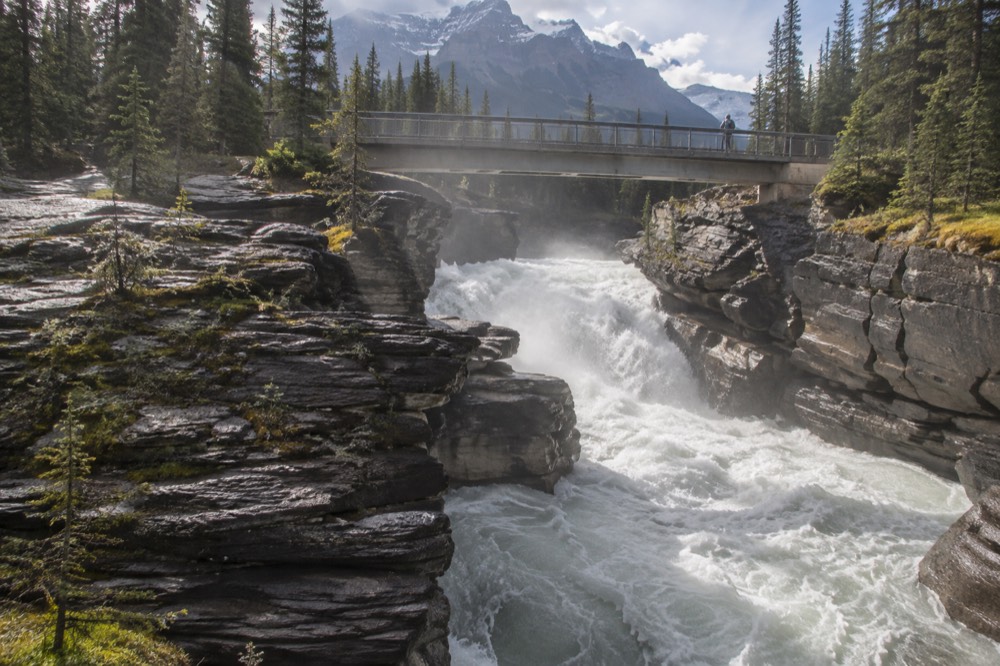
Parks Canada's own stop distances give a sense of how the day fills up. Sunwapta Falls is 54 km from Jasper and 179 km from Lake Louise. Athabasca Falls is 30 km from Jasper and 203 km from Lake Louise. The Icefield Centre sits 103 km south of Jasper. Between those anchors sit the viewpoints, the pullouts and the picnic sites, and the parkway's long steep grades of 8 to 11 percent near Bow Lake and on the ascent and descent of Sunwapta Pass mean the road demands attention rather than momentum.
| Stop on the parkway | Distance from Jasper | Distance from Lake Louise | What it is |
|---|---|---|---|
| Athabasca Falls | 30 km | 203 km | 23-metre falls, one of the most powerful in the mountain parks |
| Sunwapta Falls | 54 km | 179 km | Stepping waterfall above a deep limestone gorge |
| Columbia Icefield / Icefield Centre | 103 km | 129 km | Largest icefield in the Canadian Rockies, tours and services |
| Total parkway length | 232 km | 232 km | Lake Louise to Jasper townsite |
Wildlife is the wildcard. Bighorn sheep, mountain goats, coyotes and deer are named by Parks Canada as commonly sighted along the parkway in winter, and roadside wildlife viewing is a designated restricted activity year round: stay in your vehicle, slow down, pull over only where it is safe, and move on immediately if a traffic jam develops. The official distances are 30 m from elk, deer and moose, and 100 m from bears and other carnivores. A bear on the roadside can stop traffic for an hour, and no schedule survives that. A sighting is never a guarantee, but the possibility alone changes the pace of the day.
The glacier is the stop that swallows the most time, in the best way. The Athabasca Glacier sits across the road from the Icefield Centre, and Parks Canada calls it Canada's most accessible glacier. It has been receding for the last 125 years, and from 1985 to 2024 Jasper lost 21.8 percent of its total glacier mass. Walking on it without a guide is not the safe version of this stop: the ice hides deep crevasses, and Parks Canada's own warning is blunt that people have been killed falling into them. A guided hike turns the same hour into something you will still be describing at dinner.
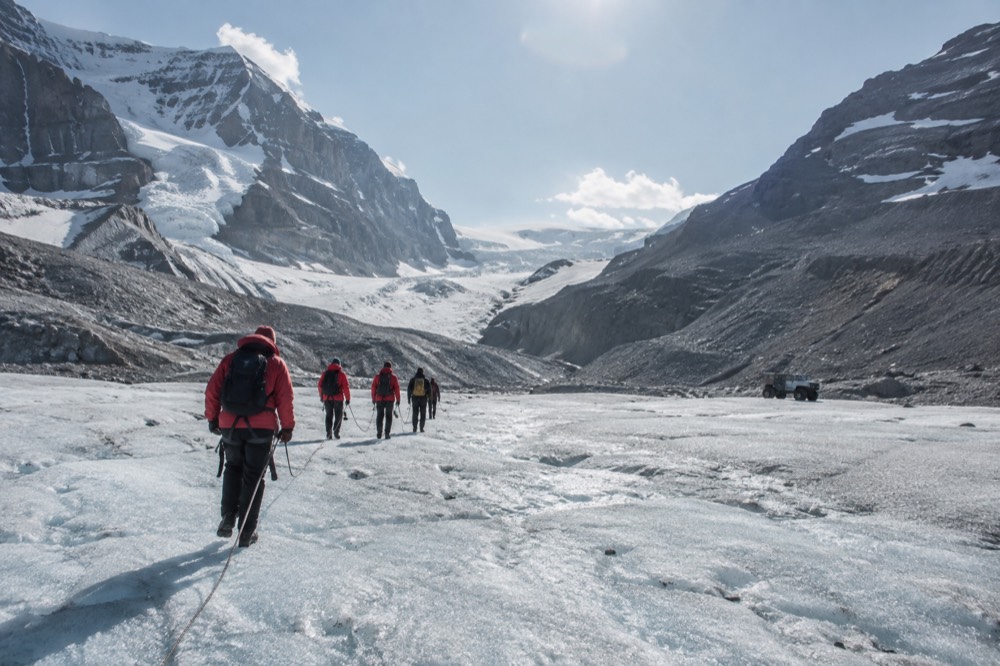
Run the math on the 232 km length and the limits stack up fast. Even holding a steady 90 km/h, which the grades near Bow Lake and Sunwapta Pass make unrealistic for much of the route, the driving alone is close to three hours before you stop anywhere. Add the three anchor stops, a handful of pullouts, and one wildlife slowdown, and a one-way transit becomes a full day without anything going wrong. Anyone planning to reach Jasper or Lake Louise by a set time should assume the parkway will take most of the daylight, especially in winter.
The road's rules also shape what you carry. With no cell coverage anywhere along the route, a downloaded map and a paper backup are not optional, and with no services in winter you should treat Jasper or Lake Louise as your last chance for fuel, food, and a washroom. The same distances that make the drive long make turning back expensive: from the Icefield Centre you are still 103 km from Jasper and 129 km from Lake Louise, so decide your turnaround point before you leave, not after.
Does the season change the answer?
Yes, and more than most visitors expect. The Icefields Parkway has no seasonal closure, but from 1 November to 31 March a vehicle on it must have snow tires or chains, there are no services along it in winter, it is not salted, and maintenance runs only 7 am to 3:30 pm. Winter on this road is a different trip, not a slower version of the summer one.
Parks Canada publishes a dedicated winter page for the parkway precisely because people drive it in snow. The road is often compact snow rather than clear asphalt. There is no cell coverage en route, with service only at each end. Road reports describe the worst condition a driver may meet over the whole length, so a promising forecast at one end means less than it seems. A 20 km stretch runs through winter habitat for the Jasper herd of woodland caribou, a species at risk, which is part of why the rules are what they are.
The practical version of all this: check 511 Alberta before you drive, and Parks Canada's road restrictions and seasonal closures page for anything seasonal. Parks Canada warns explicitly that navigation apps are not always accurate for Jasper National Park. The parkway itself stays open, but conditions, not calendars, decide how long the drive takes between November and March.
Summer has its own version of the same lesson. The Miette Road turnoff, the Cavell area and several other side roads carry seasonal windows in Parks Canada's 2026 tentative plan, and those dates may change without notice. Cavell Road in particular is closed for the 2026 season with no reopening date set. The parkway is the constant; the things hanging off it move with the seasons.
How should you split the drive across a day?
The pattern that works is one anchor stop in each half of the day: the Columbia Icefield area at the midpoint, where the Icefield Centre sits 103 km south of Jasper, and one waterfall, either Sunwapta or Athabasca, in whichever half you are not using for the ice. Trying to do everything on the parkway in one pass is how people end up driving the best section in the dark.
Direction matters less than pacing. Coming south from Jasper, Athabasca Falls arrives 30 km out, early enough to catch with morning light, and the icefield lands mid-day. Coming north from Lake Louise, Bow Lake and Peyto come first, the icefield again lands mid-day, and the falls stack up in the afternoon. Either way, the icefield is the fulcrum, and the tours there run on the glacier's clock, not yours. The Columbia Icefield Adventure runs 1 May to 12 October in 2026, weather dependent, and the glacier hikes are three to four hours door to door.
The guided glacier options are worth the hours they cost. Tread Lightly's four-hour hike, rated 4.8 across 198 reviews and from $135.25, puts you on the Athabasca Glacier with a guide who reads the ice, and it is the kind of stop that justifies arriving in Jasper late. IceWalks runs a three-hour version rated 4.9 across 422 reviews, from $101.57. Both confirm stops on the glacier itself, and both leave the rest of the day for the road.
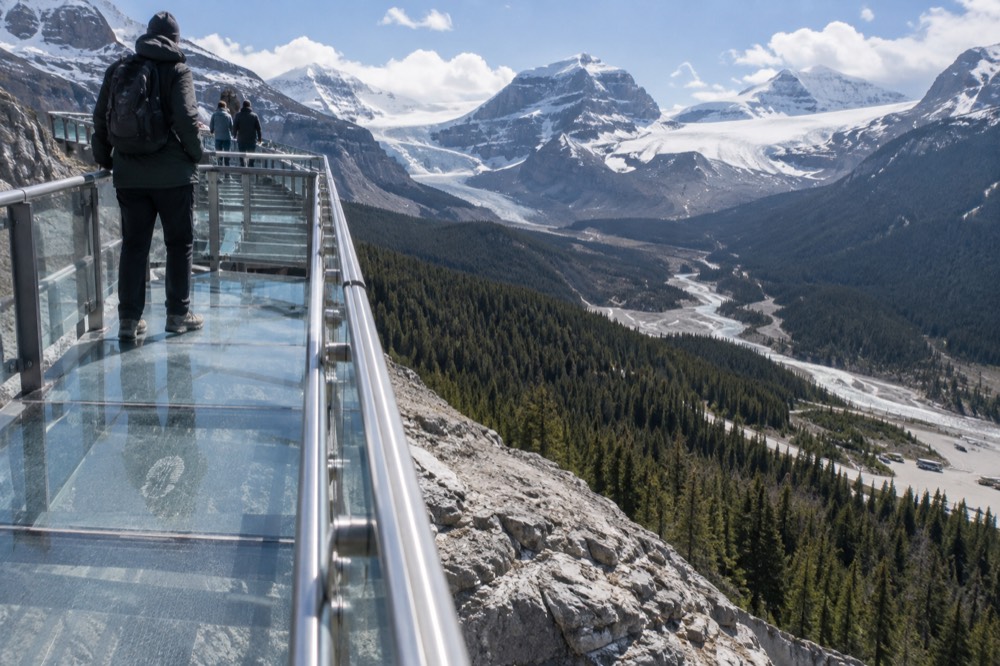
If a hike is more commitment than the day allows, the Ice Explorer and Skywalk combo, rated 4.5 across 3,187 reviews and from $95.17, covers the glacier ride and the glass-floored Skywalk over the Sunwapta Valley in a shorter window. It is the midpoint stop that costs the least time and still changes the character of the day. The full picture of what each glacier option includes is in the guide to Columbia Icefield tour choices.
Is it better to drive yourself or take a tour?
Self-driving wins on flexibility and loses on the things this road punishes: no winter services, no cell coverage, and a driver who cannot look up. A tour trades the steering wheel for a guide who knows the pullouts, handles the park pass question, and drops you at the Jasper end without a second vehicle to retrieve. For the one-way Banff to Jasper traveller, that trade is often decisive.
The one-way problem is real. Driving the parkway between Banff and Jasper means a car parked at the wrong end of 232 km, and Brewster Express runs coaches between Jasper and Banff along the Icefields Parkway partly for that reason. A guided day tour that ends in Jasper, such as the 10-hour Jasper to Banff route rated 5 across 3 reviews from $212.2, solves the geometry by putting the drive inside the itinerary rather than around it.
There is also a knowledge premium. A guide on this road knows which pullout actually has the view, where the sheep gather, and what the cloud cover over the icefield means for the afternoon. The 7-hour Columbia Icefield tour from Jasper, rated 4.6 across 213 reviews and from $248.08, folds in Athabasca Falls and the Skywalk with the driving handled. For travellers who would otherwise white-knuckle the grades near Sunwapta Pass, that is not a luxury, it is the difference between a day and an ordeal.
At the Jasper end of the drive, the Maligne Valley is where most people spend their first full day, and the cruise-and-sightseeing combination, rated 4.6 across 57 reviews and from $210.99, pairs the Spirit Island cruise with the valley's other stops. It is the natural sequel to a parkway day, and booking both is how a two-day Jasper stay fills itself without a spreadsheet.
Whatever you choose, the deeper planning question is covered in the guide to the Banff to Jasper drive, which lays out the stops, the seasons and the pass rules in one place. This site, Jasper National Park Tours, keeps the operator details current so the rest of your planning does not have to.
Common questions about driving the Icefields Parkway
How Long Does It Take To Drive The Icefields Parkway From Banff To Jasper?
No official source publishes a driving time. The verified distance is 232 km between Lake Louise and the Jasper townsite, plus the Banff to Lake Louise leg. With stops at the major sights, most travellers spend a full day on the parkway itself.
Does the Icefields Parkway close in winter?
No. It has no seasonal closure. From 1 November to 31 March a vehicle on it must have snow tires or chains, there are no services along it in winter, it is not salted, and maintenance runs 7 am to 3:30 pm. Check 511 Alberta before you drive.
Do I need a park pass to drive the Icefields Parkway?
Yes. Parks Canada states a valid national parks pass is required to drive the parkway. The daily fee is charged per person, Adult $12.25 CAD, with a Family/Group rate of $24.50 CAD covering up to seven people in one vehicle.
Is there cell coverage on the Icefields Parkway?
No. There is no cell coverage en route, with service only at each end, in the Lake Louise area and around Jasper. Plan fuel, food and any emergency needs before you start.
Can you do the Icefields Parkway in one day?
You can drive it in one day, but a day that includes the Columbia Icefield, a waterfall stop and viewpoints is full. Most travellers who add a glacier hike or the Skywalk find the day runs long, which is why many split it or take a tour.