Jasper Planetarium and Dark-Sky Tours: Choosing Your Night Under the Stars
Jasper National Park is one of the largest dark-sky preserves on the planet, and its stargazing is sold as dated evening products: a planetarium show with telescope time, a SkyTram ride to a high-altitude viewing deck, and a guided canoe trip at dusk. This guide compares them and gives you the month-by-month cloud and moon facts that decide which night to book.
Short answer
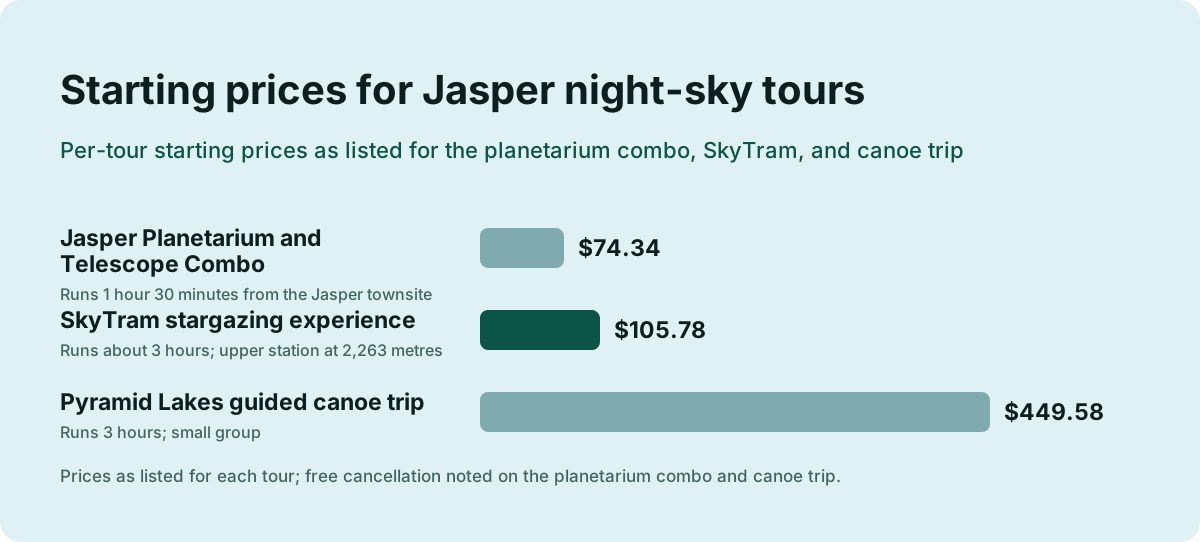
Jasper has been a Dark-Sky Preserve since 26 March 2011 and covers over 11,000 square kilometres, making it the second largest dark-sky preserve in the world. The main bookable night products are the Planetarium and Telescope Combo from $74.34, the SkyTram astronomy experience from $105.78, and a guided Pyramid Lakes canoe trip from $449.58. The clearest, warmest nights cluster in July and August.
Why Jasper is one of the best places on Earth to see the stars
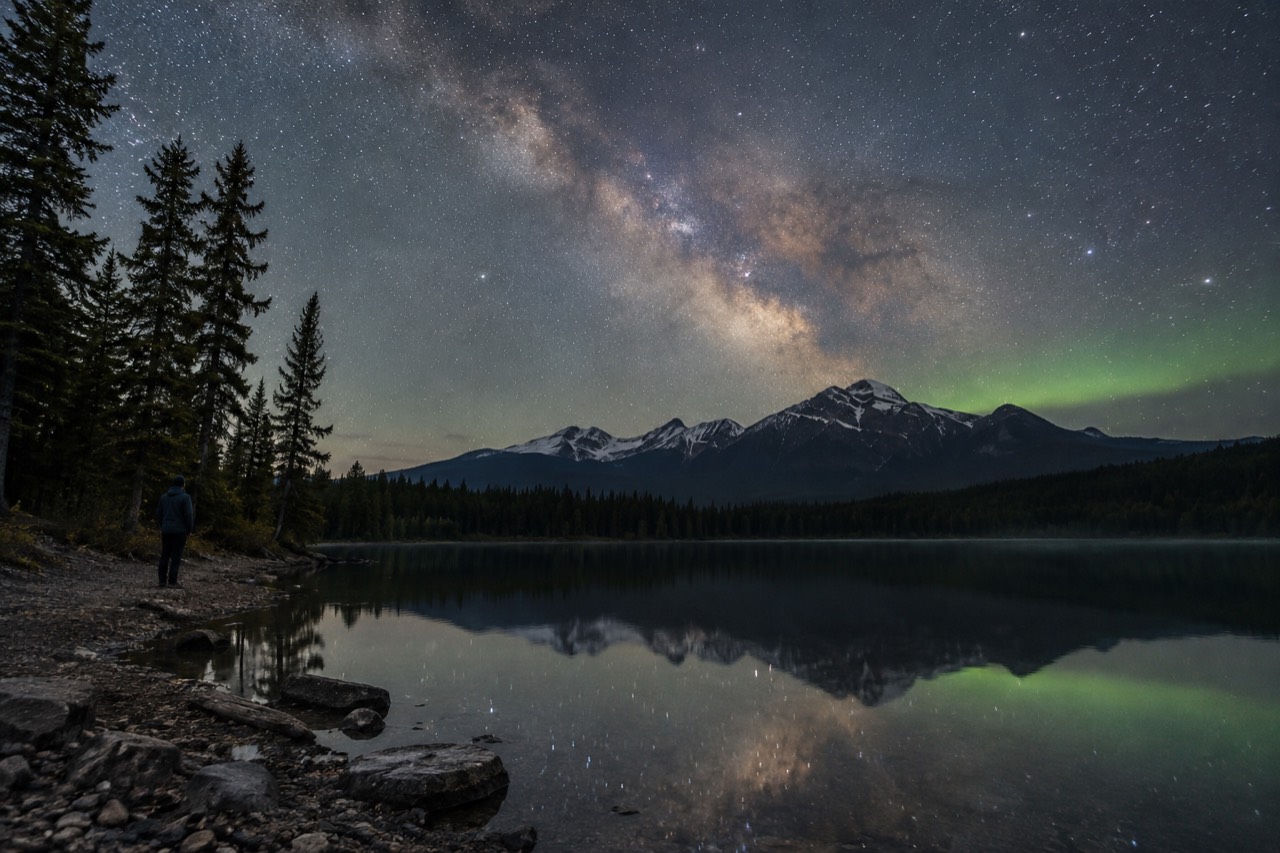
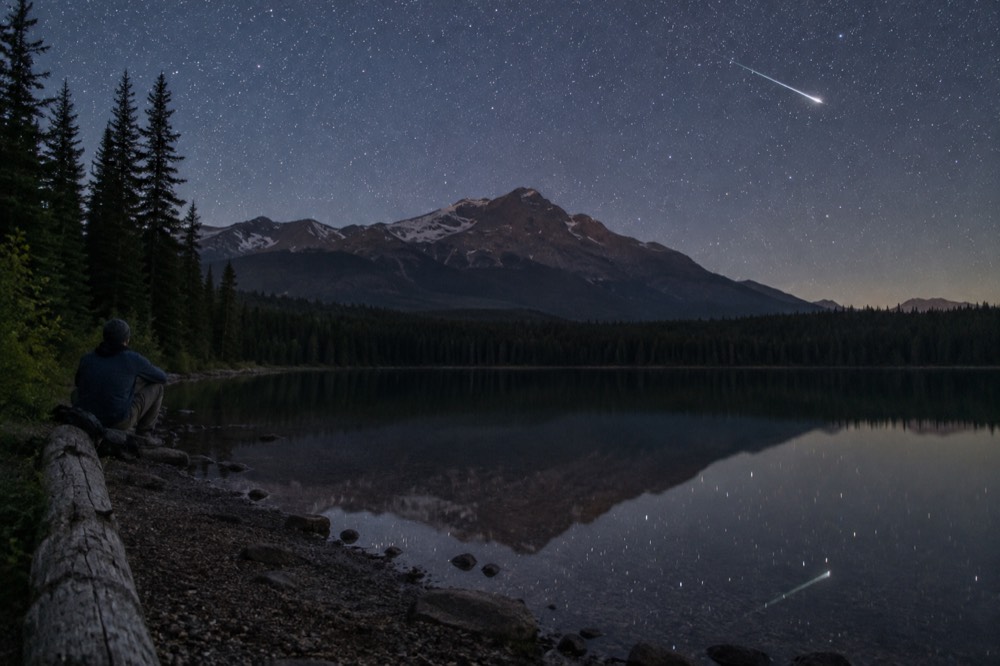
Jasper is one of the best places on Earth to see the stars because it is a vast Dark-Sky Preserve with exceptionally low light pollution, protected night skies, and easy access to remote wilderness where the Milky Way, planets, and even faint auroras appear with stunning clarity on clear nights. The designation is not an honourary title. It commits the park to managing artificial light so that the night sky stays genuinely dark, and in a park that spans 11,228 square kilometres, roughly 97 percent of which is maintained in a natural state with limited infrastructure, that adds up to a lot of sky with almost nothing standing between your eyes and the stars. The park sits within the Canadian Rocky Mountain Parks UNESCO World Heritage Site, inscribed in 1990, so the landscape you stand in while stargazing carries its own weight of recognition.
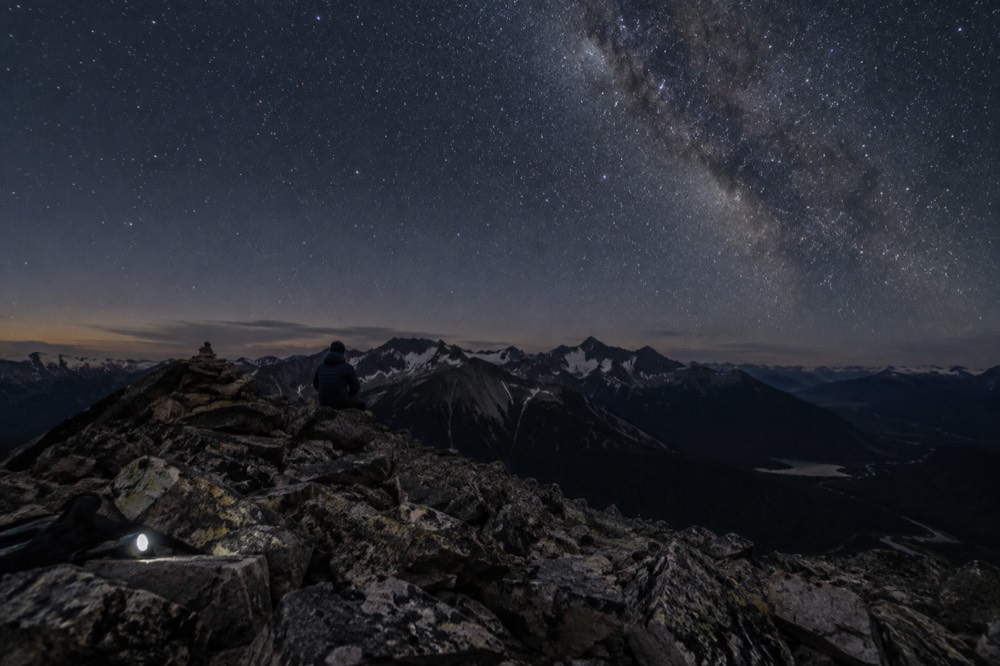
What that means in practice is that you do not need to drive far from the Jasper townsite to lose the town glow. The valley opens up within minutes, and on a clear night the dense centre of the Milky Way is visible to the naked eye from July through September, in Parks Canada's own description of the park's seasonal astronomy. The same park pages note that the Perseids meteor shower peaks in mid-August, that the Lyrids typically fall between 16 and 25 April, and that Orion's belt climbs the eastern sky from November through February, the season of the Geminids.
The park leans into this. Tourism Jasper runs the Jasper Dark-Sky Festival every October, and the park celebrates Dark-Sky Month in October alongside it. If your trip can land in October, you get festival programming on top of the ordinary darkness, though the trade-off is colder nights: the 1991 to 2020 climate normals put October's average daily low at -2.4 °C. The full picture of what the park offers after dark, from wildlife drives to hot springs, is in our guide to things to do in Jasper National Park.
What the Jasper planetarium and telescope combo actually includes
The Jasper Planetarium and Telescope Combo runs 1 hour 30 minutes from the Jasper townsite, is rated 4.2 across 164 reviews, and starts from $74.34, with free cancellation offered on the listing. The package pairs an indoor planetarium experience with outdoor telescope viewing under some of the world's darkest accessible night skies. It pairs an indoor planetarium presentation, where a guide projects and walks through the night sky, with outdoor telescope time looking at the real thing above the Rockies. That two-part structure is the product's main selling point for anyone choosing between Jasper's night tours: the planetarium half does not care about clouds, so the evening is never a total wash even when the sky above the townsite refuses to cooperate.
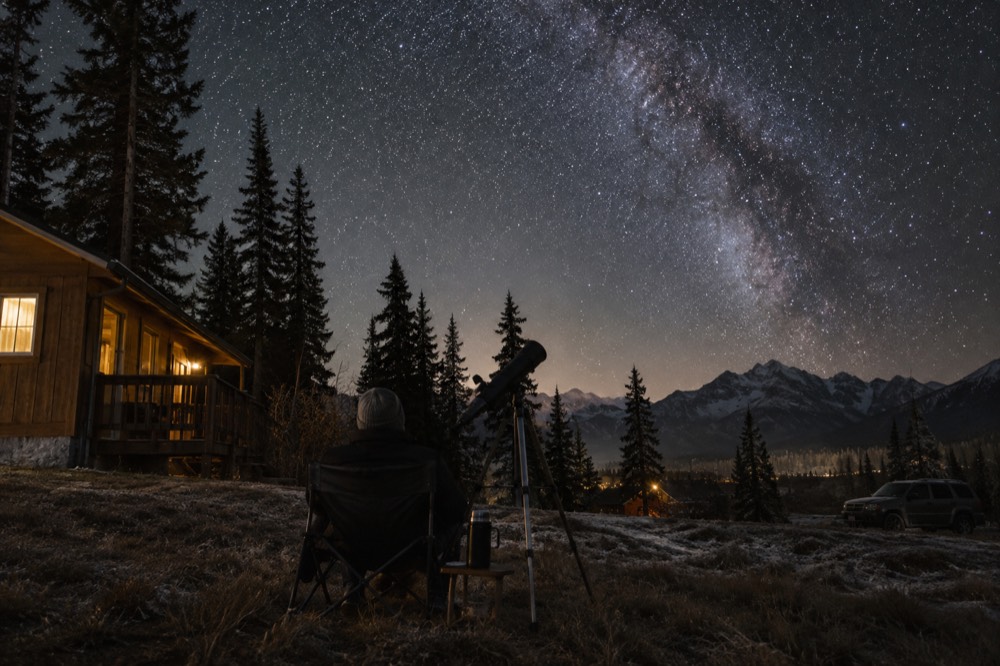
The combo is also the most townsite-anchored of the night products. It departs from the Jasper townsite, so there is no long drive at the end of a late evening, which matters if you have children with you or an early morning booked the next day. The 90-minute length sits between the shorter wildlife watches and the longer evening excursions, and the free cancellation terms on the listing make it the lowest-commitment way to test whether your group actually enjoys standing in the cold looking up.
Readers comparing this against the rest of the dark-sky lineup should weigh one thing honestly: a planetarium show is a simulation, and the telescope segment depends on sky conditions. If your whole reason for booking is the telescope, check the forecast for the specific evening before you commit, and remember that the operator's live listing, not any article, is the authority on what is included on a given night. For the broader question of what a Jasper evening can hold, our Jasper tours with hotel pickup guide covers the products that collect you from your accommodation.
How the SkyTram stargazing experience compares
The SkyTram stargazing experience runs about 3 hours, starts from $105.78, and takes you up Whistlers Mountain on the Jasper SkyTram to an upper station at 2,263 metres, where guided astronomy programming unfolds under some of the darkest skies in the Canadian Rockies, with dinner options also available on the listing. The SkyTram itself carries passengers to that upper station in seven minutes with a flight guide on board, and from there a summit trail climbs to 2,463 metres. For stargazing, the point is altitude: you rise above a layer of valley haze and, more importantly, above every light source in town. The lower station is about a 10-minute drive from Jasper, so the evening still starts and ends close to your accommodation.
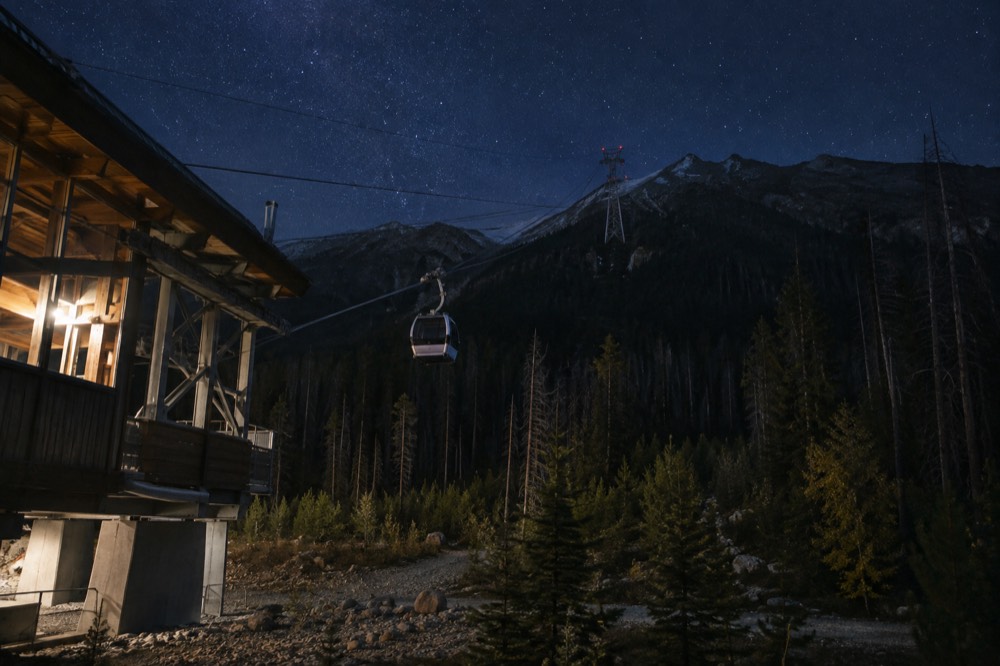
The trade-offs are real. At 2,263 metres the air is thinner and colder than in the valley, so dress for a temperature well below the townsite forecast. The experience has no rating yet on the listing, so there is less review evidence to lean on than with the planetarium combo or the lake cruise products. And the SkyTram's own 2026 operating season runs 15 April to 25 October, weather dependent, which bounds the calendar for this product the same way it bounds the daytime rides. The stargazing version is an evening product with dinner options attached, which makes it the most complete night out of the three: transport up, food if you want it, and a guide interpreting the sky.
Between the two, the decision usually comes down to weather risk and warmth. The planetarium combo keeps half its runtime indoors; the SkyTram night is outdoors at altitude but pairs the sky with a ride and a meal. Jasper's SkyTram has its own full comparison in Jasper SkyTram tickets, including the daytime product, for readers deciding whether the tram deserves a daytime slot as well.
Which months give you the best odds of a clear night
July and August are the statistically best months for stargazing in Jasper: they are the only months with zero average snowfall, daily mean temperatures of 15.4 °C and 14.6 °C, and the Milky Way's dense centre arching overhead, though they also carry the year's highest rainfall. The numbers come from Environment and Climate Change Canada's Canadian Climate Normals for 1991 to 2020 at the Jasper station. June is the wettest month on paper at 57.6 mm of precipitation, and it is also the month with the latest sunsets, which pushes true darkness quite late for families with small children.
| Month | Daily mean °C | Daily low °C | Precipitation mm | Snowfall cm | Astronomical draw |
|---|---|---|---|---|---|
| January | -8.8 | -14.4 | 20.2 | 21.2 | Orion and the Geminids season |
| April | 3.7 | -3.6 | 19.6 | 7.9 | Lyrids meteor shower, 16 to 25 April |
| July | 15.4 | 7.4 | 52.2 | 0.0 | Milky Way core overhead |
| August | 14.6 | 6.1 | 50.8 | 0.0 | Milky Way core, Perseids peak mid-August |
| September | 10.2 | 2.5 | 36.2 | 2.1 | Milky Way core, Andromeda rising |
| October | 3.9 | -2.4 | 26.0 | 8.3 | Dark-Sky Festival and Dark-Sky Month |
One caution on the rainfall numbers: the published August rainfall figure (58.8 mm) actually exceeds the August total precipitation figure (50.8 mm) because the two series are threaded from different station records. Quote one series or the other when you check forecasts, and do not try to subtract them. Precipitation averages also say nothing about cloud cover on your specific evening, so treat the table as a planning prior, not a forecast, and check the sky forecast for the actual date you intend to book.
How the moon decides whether any tour is worth booking
The moon matters more than the weather forecast for what you will actually see: on a night within a few days of a full moon, the sky is bright enough to wash out the Milky Way entirely, while the two weeks around a new moon give Jasper's darkness room to work. No tour operator can fix this. A planetarium show is unaffected, a telescope still shows you the moon and planets, but naked-eye stargazing, the thing people travel to a dark-sky preserve for, is a moon-phase question first and a cloud question second.
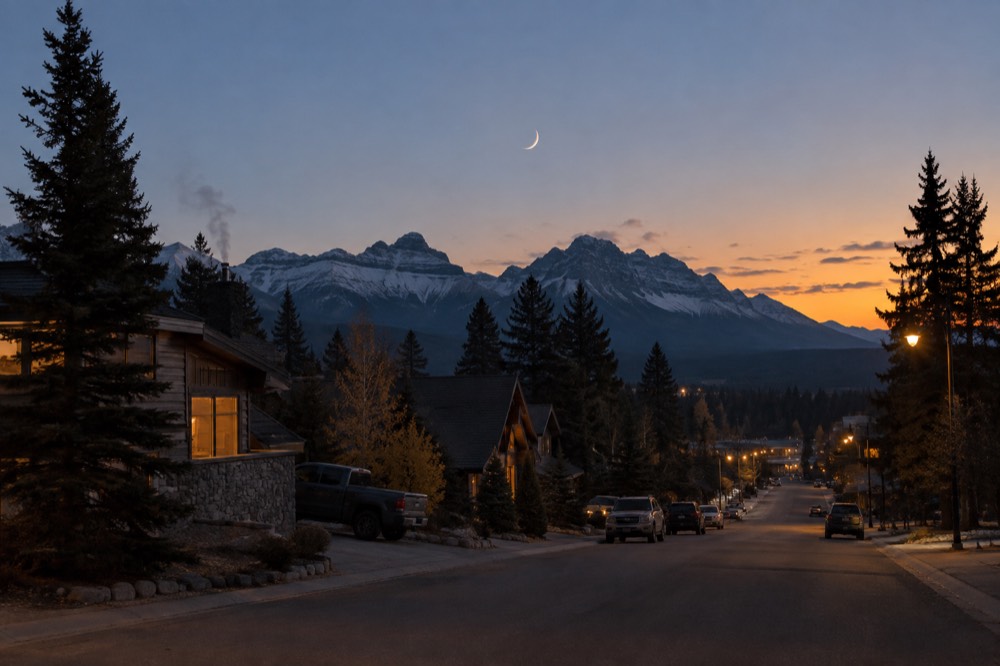
The practical method: find the new moon dates for the month of your trip, and book your stargazing night in the window from about four days before to about five days after new moon. If your dates are fixed and they land on a bright moon, tilt your choice toward the products the moon hurts least. The planetarium combo loses nothing. A telescope session can pivot to lunar and planetary viewing, which is a different show but not a lesser one. The SkyTram night still delivers the ride, the altitude and the dinner. What the moon ruins is the wide-field Milky Way view, so an evening built purely around standing under it, like the canoe trip below, is the one to reschedule.
| Moon phase window | Naked-eye Milky Way | Telescope viewing | Best product fit |
|---|---|---|---|
| New moon ±5 days | Excellent | Deep-sky objects at their best | Any night product |
| First quarter | Fading after moonrise | Planets and moon before midnight | Canoe or SkyTram night |
| Full moon ±3 days | Washed out | Moon and planets only | Planetarium combo |
| Last quarter | Good before moonrise | Deep-sky early, moon late | SkyTram or canoe |
This is also where the honesty rule of this site applies: no tour can promise you the Milky Way, a meteor shower or any specific sight. What you can control is the phase, the forecast and the product choice, and the operator's live listing for the date you are considering is the final word on start times and inclusions.
Is the nighttime canoe trip worth it for stargazing?
The Pyramid Lakes guided canoe trip runs 3 hours, is limited to a small group, and starts from $449.58, with free cancellation; it paddles Pyramid Lake and the Jasper townsite area at the time of evening when the sky does its best work. Pyramid Lake and Pyramid Island are among the park's open day-use areas, and a canoe at dusk puts water between you and any residual ground light, doubling the sky: once above, once reflected. It is the most atmospheric of the three night products and also the most weather- and phase-dependent, which is exactly what its price reflects.
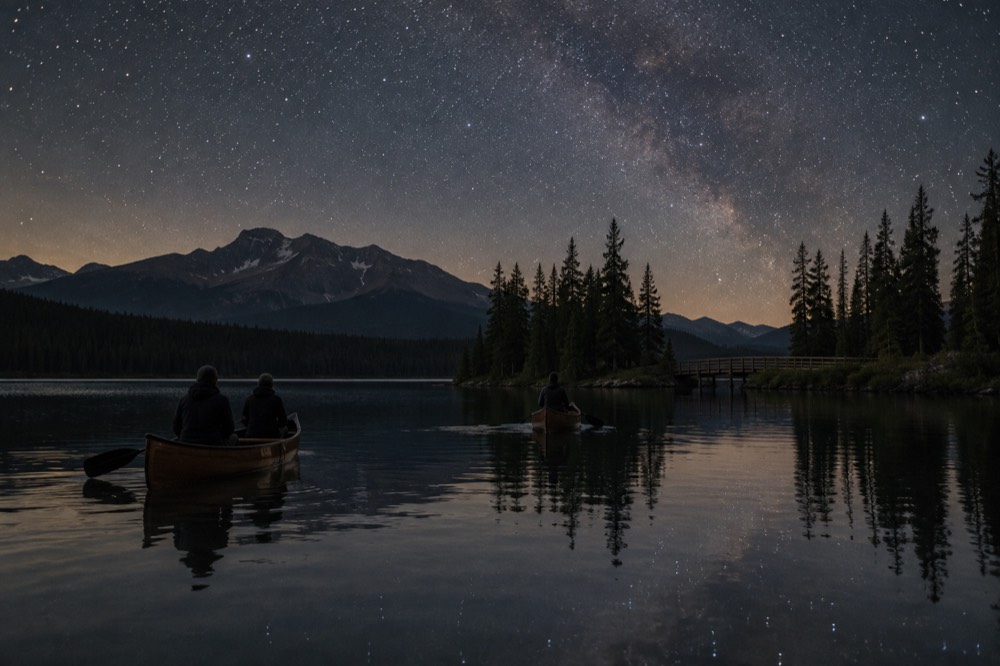
It has no rating yet on the listing, so there is less crowd evidence than for the rafting and cruise products, but the format is a known quantity in Jasper: small group, guide with you, snacks and drinks included. Book it only on a night you have chosen deliberately, a near-new moon and a settled forecast, because the product's entire value is the sky over the water. On a cloudy or moonlit night it becomes a pleasant paddle in the dark, which is a different purchase.
For readers whose interest is less the sky and more being on Jasper's water in daylight, the full range of options, from a gentle two-hour float to Class III whitewater on the Sunwapta, is covered in Jasper rafting tours. The canoe trip above is the only roster product built around the evening hours on the water.
Can you stargaze in Jasper without a tour at all?
Yes, and this is one of the few tour-guide topics where the free option is genuinely world-class: a park pass is all you need to stand under a dark-sky preserve covering over 11,000 square kilometres, and many locals would tell you the best seat is no seat at all. The pass itself is a legal requirement to be in the park, charged per person at $12.25 CAD per day for adults, $10.75 CAD for seniors, free for youth 17 and under, with a Family/Group daily rate of $24.50 CAD covering up to seven people in one vehicle. A day pass is valid until 4 pm the day after purchase, and Parks Canada's fee page is the authority since fees rise annually.
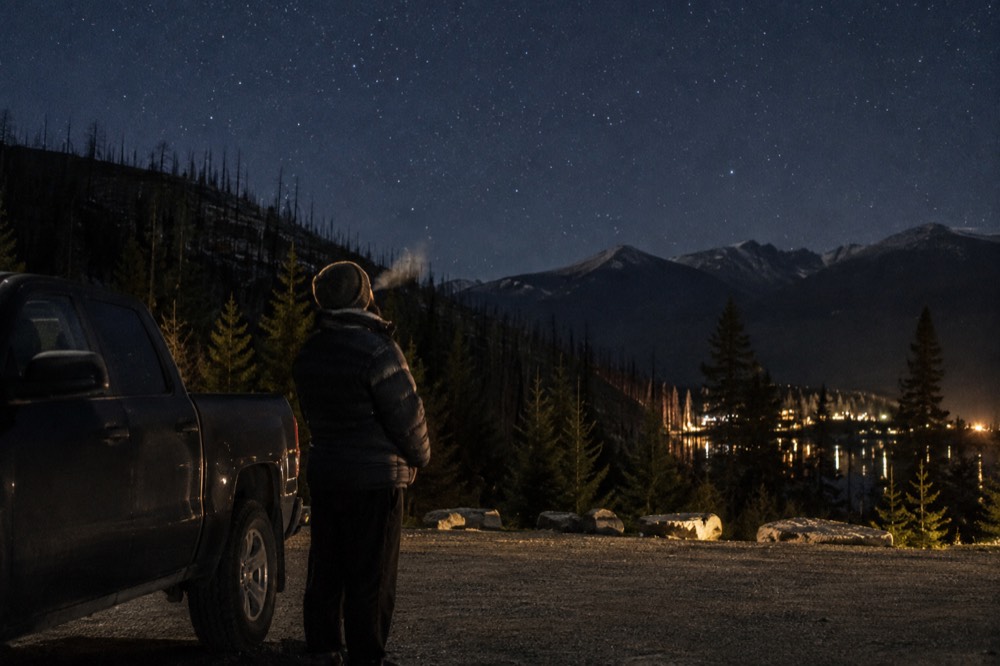
The good free spots are the ones already listed as open in the park's What's Open register: Pyramid Beach, Pyramid Island, Patricia Lake, Annette Lake and Edith Lake all sit close to town with water and open sky. Two cautions apply. First, driving: check 511 Alberta and Parks Canada's road restrictions page before you drive any seasonal road at night, because Parks Canada warns that navigation apps are not always accurate for Jasper National Park. Second, wildlife: the park's own rules say stay 30 m from elk, deer and moose and 100 m from bears and other carnivores, and roadside viewing is a restricted activity year round. A dark lakeside pullout is exactly where animals are.
So why pay at all? The honest answer is the three things a tour adds that a car park cannot: a telescope, a guide who can name what you are looking at, and a scheduled commitment that gets you out of the hotel after a long driving day. Readers who want the full cost picture across every category of Jasper product, passes included, will find it in what Jasper tours cost, and the entry-fee rules are broken out in detail in Jasper National Park entry fees.
Which Jasper dark-sky tour should you actually book?
Book the planetarium combo if clouds are possible or children are coming, the SkyTram astronomy night if you want altitude and dinner in one ticket, and the canoe trip only on a hand-picked clear, moonless night; on a fixed budget, the combo from $74.34 delivers telescope time for the least money. That is the whole decision, compressed. The rest of this section is the reasoning for readers whose trip has constraints, because most trips do.
| Product | Length | From | Rating | Weather exposure | Best for |
|---|---|---|---|---|---|
| Planetarium and Telescope Combo | 1 hr 30 min | $74.34 | 4.2 across 164 reviews | Low, half indoors | Families, cloudy nights, first-timers |
| SkyTram astronomy experience | 3 hrs | $105.78 | No rating yet | High, at altitude | A full night out with dinner options |
| Pyramid Lakes canoe trip | 3 hrs | $449.58 | No rating yet | High, on the water | A chosen clear night, small group |
If your dates are locked and the moon is bright, the combo is the safe pick and the SkyTram is the indulgent one. If your dates are flexible, pick the moon window first, then the product, because the cheapest ticket under a new moon beats the most expensive evening under a full one. And if you are building a whole Jasper itinerary rather than one night, the seasonal logic in best time to visit Jasper and the pacing advice in how many days in Jasper will tell you how a dark-sky evening fits alongside the glacier, lake and wildlife products that fill Jasper's daylight hours. Whatever you choose, this site, Jasper National Park Tours, keeps the full roster with live prices and availability.
Common questions about Jasper dark-sky tours
Is Jasper really one of the best places in the world for stargazing?
Yes, and the claim is official rather than promotional. The Royal Astronomical Society of Canada designated Jasper National Park a Dark-Sky Preserve on 26 March 2011, and at over 11,000 square kilometres it is the second largest dark-sky preserve in the world. The park also runs Dark-Sky Month each October with the Jasper Dark-Sky Festival.
What is the Jasper planetarium?
It is an indoor domed-theatre presentation in the Jasper townsite where a guide projects and walks through the night sky. The Planetarium and Telescope Combo pairs it with outdoor telescope viewing, runs 1 hour 30 minutes, starts from $74.34, is rated 4.2 across 164 reviews, and carries free cancellation on the listing.
When is the best month for stargazing in Jasper?
July and August, statistically: they are the only months with zero average snowfall in the 1991 to 2020 climate normals, with daily means of 15.4 °C and 14.6 °C, and the Milky Way's dense centre arches overhead in those months. October adds the Dark-Sky Festival but nights fall below freezing on average.
Does the moon phase matter for a Jasper stargazing tour?
It matters more than most people expect. Within a few days of a full moon the sky is bright enough to wash out the Milky Way entirely, so book near a new moon if naked-eye stargazing is the goal. A planetarium show is unaffected, and a telescope can pivot to the moon and planets, but wide-field views need darkness.
Can I see the Milky Way from the Jasper townsite?
On a clear, moonless night you can see it from the edges of town and from open water nearby such as Pyramid Lake, but the best views come from a short drive to an open lakeshore like Patricia, Annette or Edith Lake. All are listed as open day-use areas in the park's What's Open register.
Do I need a park pass for a stargazing tour in Jasper?
A park pass is legally required to be in Jasper National Park, charged per person: $12.25 CAD per day for adults, $10.75 CAD for seniors, free for youth 17 and under, with a Family/Group daily rate of $24.50 CAD covering up to seven people in one vehicle. Whether a tour's ticket includes the pass is an operator-by-operator decision, so check each tour's own inclusions list.