What Not To Miss In Jasper National Park?
A research-backed shortlist of what not to miss in Jasper National Park: the Columbia Icefield, Maligne Lake and Spirit Island, the Maligne Valley, and the sights around town, with what is open and what is closed.
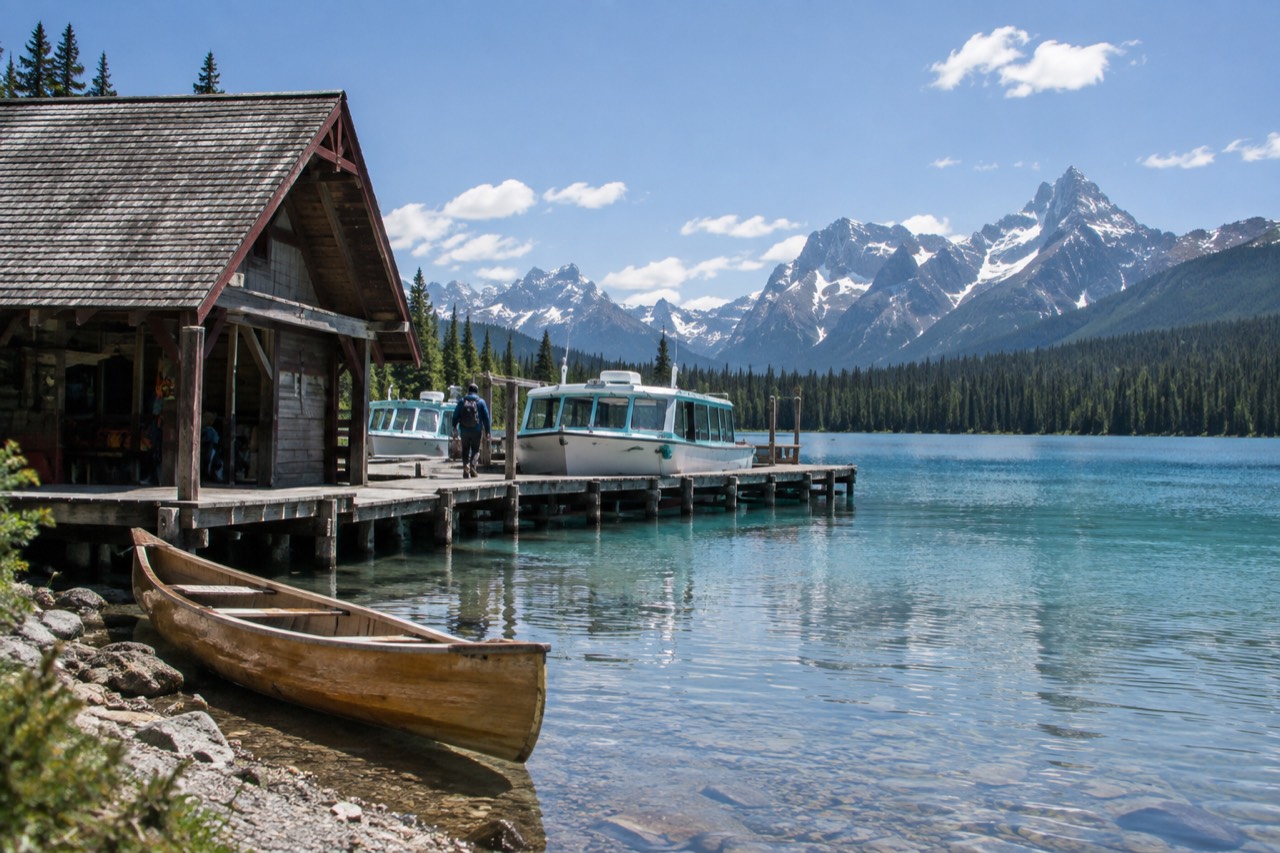
Jasper National Park is the largest of the Canadian Rocky Mountain national parks, established in 1907 and spanning 11,228 square kilometres. It sits inside the Canadian Rocky Mountain Parks UNESCO World Heritage Site, inscribed in 1990, and since 2011 it has also been one of the world's largest dark-sky preserves. That scale is the problem. A visitor with three days cannot see a park the size of a small country, and the honest answer to what not to miss is a short list of places, most of which are easier, safer or simply possible only with a ticket or a guide.
One thing shapes every 2026 itinerary, and it would be dishonest to bury it. The July 2024 Jasper Wildfire burned 32,722 hectares, destroyed 358 structures in town, and left two popular areas closed for the entire 2026 season: Cavell Road with the Edith Cavell trails, and Maligne Canyon. Parks Canada's own summary is that the majority of the park is now open and ready to explore, and virtually all trails have reopened. So the shortlist below is built around what is genuinely bookable now, not what a guidebook printed before 2024 still promises.
What Not To Miss In Jasper National Park?
The five sights that consistently earn their place are the Columbia Icefield and Athabasca Glacier, Maligne Lake with Spirit Island, Medicine Lake on the Maligne Valley drive, Athabasca Falls, and the Jasper SkyTram. A park pass is legally required for all of it, charged per person at $12.25 CAD for adults with a $24.50 CAD family cap for up to seven people in one vehicle. Maligne Canyon and Cavell Road are closed for the 2026 season.
Start with the geography, because it decides the itinerary. Jasper townsite sits at the junction of Highway 16 and the Icefields Parkway. The Parkway runs 232 km south to Lake Louise and holds the glacier country. The Maligne Valley branches east of town and holds the lake country. Everything on the shortlist sits along one of those two corridors, which is why most visitors structure their days as a glacier day, a Maligne day, and a town day.
The glacier day is the Icefields Parkway. Parks Canada calls it one of the most scenic drives in the world, and the numbers back the reputation: Sunwapta Falls at 54 km from Jasper, Athabasca Falls at 30 km, and the Icefield Centre 103 km south on Highway 93. The road itself is worth the trip even before you stop. Bighorn sheep, mountain goats, coyotes and deer are commonly sighted along it in winter, and a 20 km stretch runs through the winter habitat of the Jasper caribou herd.
The Maligne day is shorter on kilometres and denser on stops. The Maligne Lake Road is open year round, and the drive passes Medicine Lake before ending at the largest natural lake in the Canadian Rockies. The town day needs the least driving of all: the SkyTram lower station is about a 10-minute drive from town, and the Athabasca River runs right past it.
If you are planning the trip around these three days, the three experiences below are the ones this site's research keeps pointing back to: the glass-floored Skywalk over the Sunwapta Valley, the combined Skywalk and Ice Explorer glacier ticket, and a small-group guided canoe trip on the Pyramid Lakes.
Why is the Columbia Icefield the one sight you should not skip?
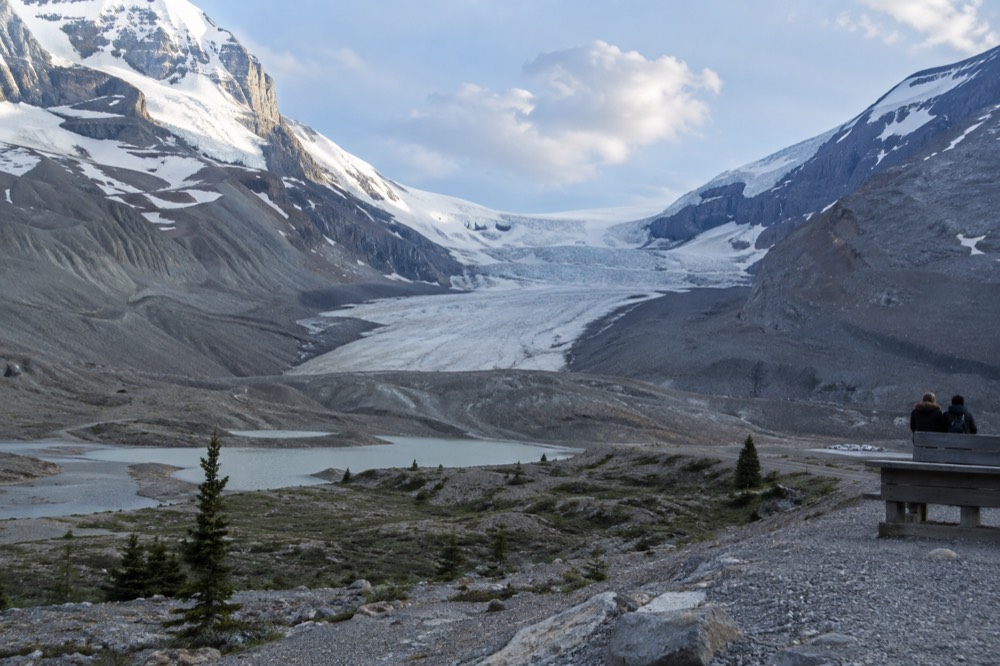
The Columbia Icefield is the largest icefield in the Canadian Rockies, more than 300 square kilometres of ice, and the Athabasca Glacier spills from it right beside the Highway 93 parking area. Parks Canada calls the glacier Canada's most accessible glacier, and no other stop on the Icefields Parkway puts you standing on ice that feeds three oceans. The Skywalk and the Ice Explorer are the two ticketed ways to experience it.
The icefield is a surviving remnant of the ice mass that once mantled most of Western Canada's mountains. Its most remarkable feature is invisible from the road: Mount Snowdome, on the icefield, is one of only two hydrological apexes in North America, meaning meltwater from its ice flows to the Pacific, the Arctic and the Atlantic. The Athabasca Glacier descends from the icefield over three giant bedrock steps and sits across the road from the Icefield Centre, which is 103 km south of Jasper.
What you can do there depends on the ticket. The Columbia Icefield Skywalk is a glass-floored walkway suspended over the Sunwapta Valley, admission from $37.01, rated 4.4 across 1050 reviews. The Ice Explorer is the giant all-terrain vehicle that drives down onto the Athabasca Glacier itself, and the combo ticket that pairs both runs from $95.17, rated 4.5 across 3187 reviews. Both run on the Pursuit season, 1 May to 12 October in 2026, weather dependent. Check current details on the official Columbia Icefield attraction page.
There is also a guided option that walks onto the ice rather than riding onto it. IceWalks runs a 3-hour guided glacier hike from $101.57, rated 4.9 across 422 reviews, and Tread Lightly runs a 4-hour version from $135.25. These matter because of one safety fact Parks Canada states in unusually blunt language: the glacier is dangerous, people have been killed falling into hidden crevasses, and visitors should not cross the barriers. Walking on the ice without a guide is legal in the accessible zone, but the guided hikes exist because the ice is not a place to improvise.
The glacier is also shrinking, and the numbers are worth knowing before you go. From 1985 to 2024 Jasper lost 21.8 percent of its total glacier mass, and the Columbia Icefield alone lost nearly 13.3 percent over the same period. In 2023 the Athabasca Glacier saw more ice melt than in any of the previous 10 years. Parks Canada states that if current trends continue, the park's glaciers will disappear within the next century. This is a sight on a clock, which is part of why it sits at the top of the not-miss list.
Is Maligne Lake and Spirit Island worth the drive?
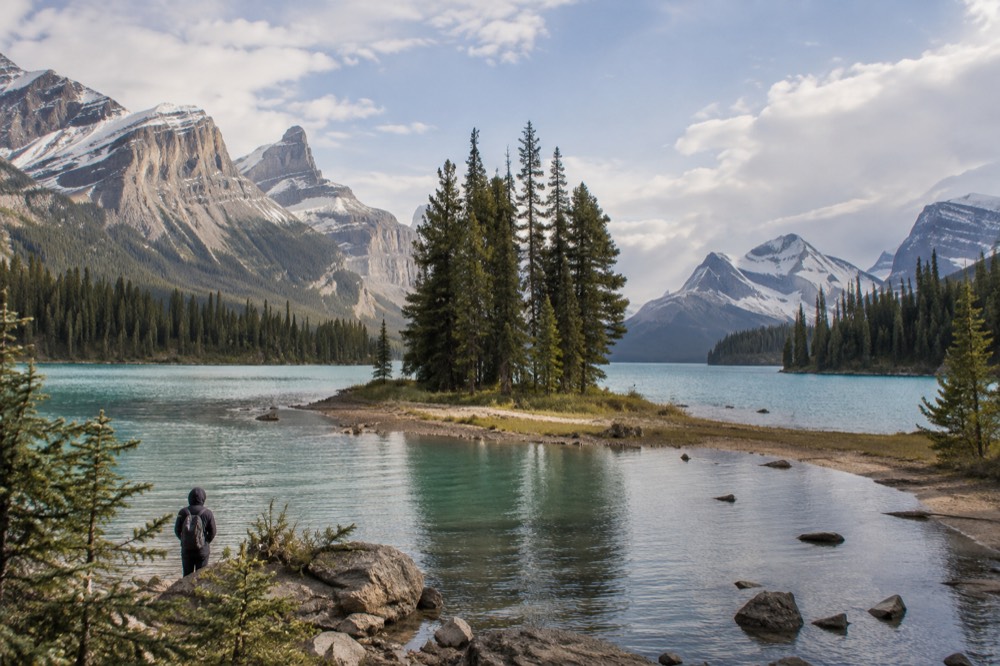
Maligne Lake is the largest natural lake in the Canadian Rockies, 22.3 km long and up to 96 m deep, and Spirit Island sits 14 km up-lake with no road or trail access. Tour boats or non-motorized private craft are the only means of reaching it. The cruise runs from $87.45 and rates 4.8 across 1279 reviews, operating 27 May to 11 October in 2026, weather dependent.
The island is the single most photographed scene in the park, a small tuft of forest nearly surrounded by turquoise water with the Queen Elizabeth range behind it. Parks Canada's own facts sheet is unambiguous about access: the island is 14 kilometres up-lake and there is no road or trail. That makes the cruise, operated by Pursuit, the practical way to see it, and Pursuit advises allowing at least 90 minutes for the drive from Jasper and arriving about an hour before the cruise time. Missed cruises are non-refundable with limited rebooking, so the timing advice is not decoration.
Several tours bundle the cruise with the valley drive, which is worth comparing if you would rather not self-drive the Maligne Lake Road. The SunDog Maligne Valley wildlife and cruise tour runs 6 hours from $140.35, and the fuller valley tour from $151.63 adds Sunwapta Falls and Miette Hot Springs. There is also a dedicated comparison on this site if you are weighing the operators, in choosing the best cruise on Maligne Lake.
The lake carries history beyond the postcard. It was known as Chaba Imne, Beaver Lake, by the Indigenous people who lived in Jasper, and in 1907 Mary Schaeffer, a Quaker from Philadelphia, followed a map obtained from Samson Beaver to reach it and wrote about it. The Maligne Lake Boat House survived the 2024 wildfire, along with the other structures in the lake area, so the cruise operates from the historic boathouse as it always has.
What should you stop at along the Maligne Valley drive?
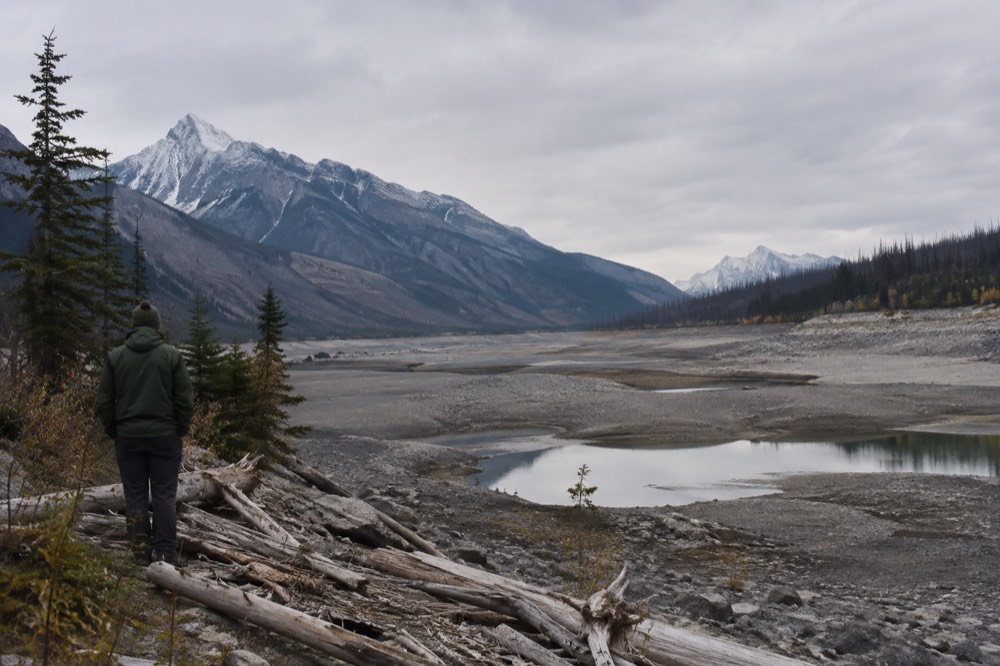
Medicine Lake is the essential stop, a lake with no visible outflow that drains through sinkholes into a limestone cave system and resurfaces 16 km downstream near Maligne Canyon. Parks Canada calls it one of the largest known sinking rivers in the Western Hemisphere. In late autumn and winter the lake drains to a mudflat. Maligne Canyon itself is closed for the 2026 season.
Medicine Lake is the kind of place that rewards a guide's explanation, because the geology is doing something no other lake in the itinerary does. The Maligne River pours in from the south, but the water leaves through sinkholes in the lake bed rather than over any surface outlet. In summer, glacial meltwater exceeds the sinkholes' capacity and the lake fills. In autumn and winter the drains win, and the lake empties into scattered pools. Parks Canada states this drainage system was part of why the Rocky Mountain Parks World Heritage Site was created. Everything else covered here is indexed on Jasper National Park Tours.
The canyon needs an honest paragraph of its own. Maligne Canyon is more than 50 metres deep and in places only two metres across, carved into limestone laid down in a shallow tropical sea about 365 million years ago. It is normally one of the park's signature sights. It is closed: access is prohibited from the First Bridge parking lot to the Fifth Bridge junction, and winter access for winter recreation is prohibited too, under a standing closure that runs for the 2026 season. A listing you may find elsewhere for a canyon ice walk does not make the activity legal. Check the Parks Canada bulletins page before planning around it, and this site covers the reasoning in why Maligne Canyon is closed.
The rest of the valley is open and working. The Maligne Lake Road is open year round. Patricia Lake and Pyramid Lake sit near the valley mouth, both on the open day-use register, and the Pyramid Lakes area is where the guided canoe trips launch. Moose and Harlequin Ducks live in the open lodgepole pine and spruce forest at the north end of Maligne Lake, according to Parks Canada, though no sighting anywhere in the park is ever a guarantee.
What wildlife can you actually expect to see?
Jasper's confirmed mammal list includes elk, deer, moose, caribou, bighorn sheep, mountain goats, bears, coyotes, wolves, beavers, lynx, cougars and wolverines. The rules are strict: stay 30 m from elk, deer and moose, 100 m from bears and other carnivores, and never leave your vehicle to view roadside wildlife. A guided wildlife tour is the way to see animals safely and legally.
The wildlife tours earn their place on the not-miss list because Jasper is one of the few large parks where animals are regularly visible from the road, and because the viewing rules have teeth. Roadside wildlife viewing is a designated restricted activity year round: stay in your vehicle, use hazard lights, pull over only where safe, and move on immediately if a jam develops. It is an offence to entice, pet, harass or feed wild animals, and pursuing an animal with a camera counts as harassment. The fine ceiling for offences under the Canada National Parks Act is $25,000 CAD.
The most-booked option is the evening or morning wildlife watch, 3 hours with hotel pickup from $68.57, rated 4.6 across 1089 reviews, which visits Pyramid Lake and the Whistlers summit area. The 6-hour wildlife and sightseeing tour from $169.04 adds the Maligne cruise and Medicine Lake. For a deeper look at where animals actually are, read the best places to see wildlife in Jasper.
Bear spray is a genuine consideration on any trail, and Parks Canada's trail guidance is to travel in groups, make noise, and carry spray you know how to use. This site has a full answer in whether you need bear spray in Jasper.
What should not be missed near the townsite?
The Jasper SkyTram, Miette Hot Springs, the Athabasca River and the Athabasca Falls each sit within an easy drive of town. The SkyTram climbs to an upper station at 2,263 metres in seven minutes. Miette Hot Springs is 61 km east. Athabasca Falls is 30 km south on the Parkway. All are open, and all require the same park pass.
The SkyTram is the town's most reliable big view because it does not depend on trail conditions or animal movements. It runs 15 April to 25 October in 2026, weather dependent, with a flight guide on board for the seven-minute ride, and from the upper station a summit trail climbs to 2,463 metres. The Whistlers and Whistlers Summit trails are both on the open register. Tickets start at $58.32 for the roundtrip, rated 4.7 across 741 reviews. Because Jasper is the second largest dark-sky preserve in the world, the SkyTram also runs an astronomy experience in the evening, from $105.78, and the Jasper Dark-Sky Festival runs every October.
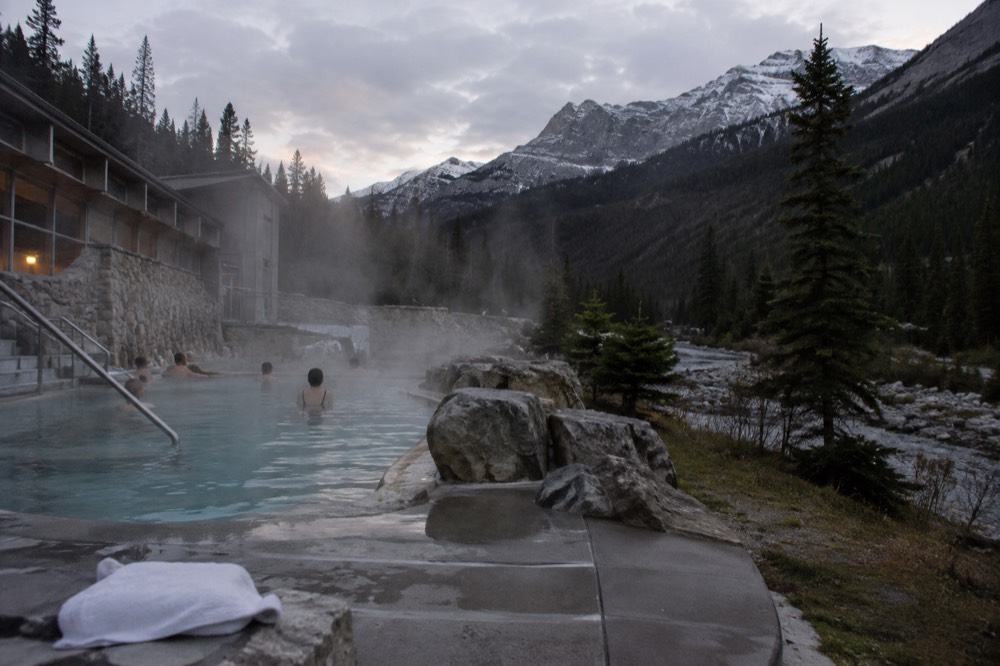
Miette Hot Springs is the hottest springs in the Canadian Rockies, with water flowing from the mountain at 54 °C and cooled to 40 °C as it enters the pool. The buying fact most visitors learn too late: admission is in person only, first come first served, and there are no advance or online tickets at all. Single-entry adult admission is $19.75 CAD. The last day of the 2026 season is 12 October, and the facility reopens in May 2027. The Miette Road itself runs 15 May to 12 October, is narrow and winding, and takes no vehicles longer than 7.5 m.
The Athabasca River gives the town its active half. The Mile 5 morning rafting trip runs 2 hours from $77.22, rated 4.9 across 466 reviews, and the family canyon run rates 5 across 249 reviews from $93.24. For something quieter, the small-group guided canoe trip on the Pyramid Lakes runs 3 hours with snacks and drinks included, from $449.58. The river was designated a Canadian Heritage River in 1989, and David Thompson travelled it in 1810.
Athabasca Falls, 30 km south of town, is the one waterfall that belongs on every list. It is only 23 metres high, which Parks Canada is candid about, but the size of the river makes it one of the most powerful falls in the mountain national parks, and it has carved potholes and a short canyon into the rock below the quartzite lip. The day-use area and trail are open.
How do you fit the shortlist into a trip?
Most visitors need three full days: one for the Icefields Parkway and the glacier, one for the Maligne Valley and the lake cruise, and one for the townsite, SkyTram and either the hot springs or the river. The park pass covers every one of those days, and a Family/Group day pass at $24.50 CAD caps the fee for up to seven people in one vehicle.
The pass math is worth doing before you buy, because it is charged per person, not per vehicle. Adult day admission is $12.25 CAD, senior $10.75 CAD, youth 17 and under free, and the Family/Group rate of $24.50 CAD covers up to seven people in one vehicle. A day pass is valid until 4 pm the following day and also admits you to Banff, Kootenay, Yoho and the other mountain parks. The Discovery Pass costs $83.50 CAD for an adult or $167.50 CAD for a family, and the crossover sits at about 6.8 day passes, so a week-long Rockies trip that touches Banff usually justifies it. Full figures and the free-entry categories are in this site's guide to the Jasper National Park entry fee.
Here is the shortlist in planning form, with the verified season and price figures for each headline sight. Treat the months as the operator pattern, weather dependent, and confirm dates on each live listing before you lock a trip.
| Sight | Where | 2026 season | Ticketed entry from |
|---|---|---|---|
| Columbia Icefield Skywalk | 103 km south on Highway 93 | 1 May to 12 October | $37.01 |
| Skywalk plus Ice Explorer combo | 103 km south on Highway 93 | 1 May to 12 October | $95.17 |
| Maligne Lake cruise to Spirit Island | End of Maligne Lake Road | 27 May to 11 October | $87.45 |
| Jasper SkyTram | About a 10-minute drive from town | 15 April to 25 October | $58.32 |
| Miette Hot Springs | 61 km east of town | Season ends 12 October, reopens May 2027 | $19.75 CAD in person only |
Season matters as much as days. July and August are the warm months, with daily means of 15.4 and 14.6 °C respectively and the densest Milky Way overhead, but they also carry the most rain, 52.2 and 50.8 mm. The glacier attractions and the lake cruise run May to October, the SkyTram runs April to October, and Miette closes in mid-October. Winter is a different park, and this site covers it in the best time to visit Jasper. For a fuller sight-by-sight rundown, see things to do in Jasper National Park.
One planning note that saves people real trouble: the Icefields Parkway does not close for winter, but from 1 November to 31 March it legally requires snow tires or chains, it is not salted, there are no services en route and no cell coverage. Navigation apps, in Parks Canada's own warning, are not always accurate for the park. Check 511 Alberta and the Parks Canada road restrictions page before any drive.
For the three ticketed experiences this article keeps returning to, the glass Skywalk, the glacier combo and the canoe trip, here is the selection again in one place.
Common questions about what not to miss in Jasper National Park
What Not To Miss In Jasper National Park?
The Columbia Icefield and Athabasca Glacier, Maligne Lake and Spirit Island, Medicine Lake, Athabasca Falls and the Jasper SkyTram. Maligne Canyon and Cavell Road are closed for the 2026 season and cannot be visited. A park pass is legally required for all travel in the park.
Is Maligne Canyon open in 2026?
No. Access to Maligne Canyon trails and the surrounding land is prohibited from the First Bridge parking lot to the Fifth Bridge junction, and winter access for winter recreation is prohibited too. Parks Canada states the canyon will remain closed for the 2026 season and has not set a reopening date.
Can you see Spirit Island without the boat cruise?
No. Spirit Island is 14 km up Maligne Lake and there is no road or trail access. Tour boats or private non-motorized craft are the only means of reaching it.
Do you need a park pass for guided tours in Jasper?
Yes, a park pass is legally required to travel anywhere in Jasper National Park, including on guided tours. Whether an operator builds the fee into the ticket varies by operator, so check each tour's inclusions list on its live listing.
Is Jasper worth visiting after the 2024 wildfire?
Yes. Parks Canada states the majority of the park is now open and ready to explore and virtually all trails have reopened. The burn is visible along the Athabasca valley south of town and in the Maligne Valley, and regrowth is under way, but the main sights, including the glacier, the lake and the SkyTram, are operating.
How many days do you need for the Jasper shortlist?
Three full days cover it: one on the Icefields Parkway with the glacier, one in the Maligne Valley with the lake cruise, and one around town with the SkyTram and either the hot springs or the river.